



Shop by Instruments Type

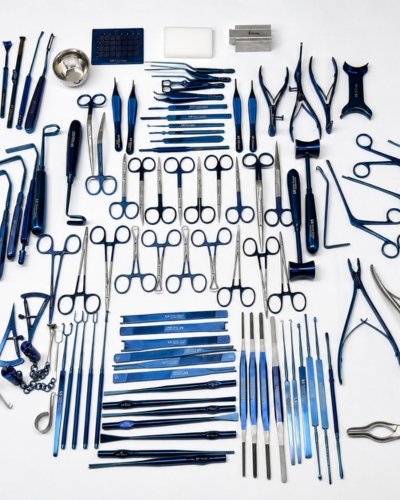
Essential surgical instruments are the core hand tools that surgeons and clinics rely on every single day — the instruments used to cut, grasp, hold, retract, suture and clear the surgical field in almost every procedure. Healermed Instruments manufactures and exports this complete daily-use range from Sialkot, Pakistan, in surgical-grade German stainless steel, for hospitals, clinics and wholesale buyers worldwide.
Explore the Essential Surgical Instruments Range
Built for Daily Use, Made to Last
- ✓ Surgical-grade German stainless steel for corrosion resistance and durability.
- ✓ Precise jaw alignment, sharp edge retention and smooth ratchet action.
- ✓ Autoclavable and built to withstand repeated sterilisation cycles.
- ✓ OEM, private-label and bulk export supply for clinics and distributors.
Frequently Asked Questions
What are essential surgical instruments?
They are the basic hand instruments used in nearly every operation: scissors, forceps, retractors, needle holders, tissue forceps, suction tips and skin hooks. Together they let a surgeon cut, grasp, hold open, suture and keep the surgical field clear.
What material are Healermed surgical instruments made from?
They are made from surgical-grade German stainless steel, which resists corrosion, holds a sharp edge and is safe for repeated autoclave sterilisation.
Surgical scissors are precision cutting instruments used to cut tissue, sutures, dressings and other materials during surgery. Healermed Instruments manufactures a full range of operating, dissecting and utility scissors in German stainless steel, with optional tungsten carbide edges for longer sharpness and cleaner cuts.
Common Types of Surgical Scissors
Why Choose Healermed Scissors
- ✓ German stainless steel with optional tungsten carbide inserts.
- ✓ Clean, sharp edges that hold up to repeated use and sterilisation.
- ✓ Straight and curved, blunt and sharp, in a range of sizes.
Frequently Asked Questions
What is the difference between Mayo and Metzenbaum scissors?
Mayo scissors have heavier, stronger blades for cutting tough tissue and fascia. Metzenbaum scissors have thinner, longer blades for delicate dissection of fine tissue.
Are tungsten carbide scissors worth it?
Yes. Tungsten carbide cutting edges stay sharp far longer than standard stainless steel, give cleaner cuts and reduce how often instruments need replacing — useful for high-volume use.
Part of the Essential Surgical Instruments range from Healermed Instruments.
Surgical forceps are locking, ring-handled instruments used to clamp blood vessels, control bleeding and hold tissue securely during surgery. Healermed Instruments manufactures hemostatic and clamping forceps in German stainless steel, with a precise ratchet lock that holds firm without slipping.
Common Types of Surgical Forceps
Why Choose Healermed Forceps
- ✓ Secure ratchet lock with clean, accurate serrations.
- ✓ Straight and curved jaws in a full range of sizes.
- ✓ Corrosion-resistant German stainless steel, fully autoclavable.
Frequently Asked Questions
What are hemostatic forceps used for?
Hemostatic forceps clamp blood vessels to stop or control bleeding during surgery. Their ratchet lock keeps pressure on the vessel without the surgeon having to hold it closed.
What is the difference between forceps and tissue forceps?
Ring-handled surgical forceps lock shut and are used for clamping. Thumb or tissue forceps are hand-held, non-locking, and used like tweezers to grasp and hold tissue.
Part of the Essential Surgical Instruments range from Healermed Instruments.
Surgical retractors hold an incision or tissue open so the surgeon has a clear, steady view of the operating site. Healermed Instruments manufactures both hand-held and self-retaining retractors in German stainless steel, with smooth edges that protect surrounding tissue.
Common Types of Surgical Retractors
Why Choose Healermed Retractors
- ✓ Smooth, atraumatic blades and tips that protect tissue.
- ✓ Reliable self-retaining locks that stay open under tension.
- ✓ German stainless steel, balanced for comfortable handling.
Frequently Asked Questions
What is a surgical retractor used for?
A retractor holds back the edges of an incision or organs so the surgeon can see and reach the area being operated on.
What is the difference between handheld and self-retaining retractors?
A hand-held retractor must be held in place by an assistant. A self-retaining retractor has a built-in lock that keeps the wound open on its own, freeing the team's hands.
Part of the Essential Surgical Instruments range from Healermed Instruments.
Surgical needle holders are locking instruments used to grip and drive a suture needle through tissue during stitching. Healermed Instruments manufactures needle holders in German stainless steel, with tungsten carbide jaw inserts that grip the needle firmly and prevent it from slipping or rotating.
Common Types of Needle Holders
Why Choose Healermed Needle Holders
- ✓ Tungsten carbide jaws for a secure, non-slip needle grip.
- ✓ Smooth, precise ratchet lock that releases cleanly.
- ✓ Available in multiple sizes for fine to heavy suturing.
Frequently Asked Questions
What is a needle holder used for?
A needle holder grips and guides a curved suture needle through tissue so a surgeon can stitch wounds and incisions closed.
Why do needle holders have tungsten carbide jaws?
Tungsten carbide is harder than steel, so the jaws grip the needle without slipping and resist wear, lasting much longer in repeated use.
Part of the Essential Surgical Instruments range from Healermed Instruments.
Thumb and tissue forceps are hand-held, non-locking instruments used to grasp, hold and steady tissue during surgery — used much like precision tweezers. Healermed Instruments manufactures toothed and non-toothed tissue forceps in German stainless steel for secure, controlled handling.
Common Types of Tissue Forceps
Why Choose Healermed Tissue Forceps
- ✓ Precise tips and teeth that grip without tearing tissue.
- ✓ Balanced spring tension for comfortable, controlled use.
- ✓ Toothed and non-toothed patterns in multiple lengths.
Frequently Asked Questions
What are tissue forceps used for?
Tissue forceps are used to grasp and steady tissue while the surgeon cuts, sutures or dissects. They work like tweezers and do not lock shut.
When should toothed forceps be used instead of smooth forceps?
Toothed forceps are used on firm tissue like skin or fascia where a secure grip is needed. Smooth forceps are used on delicate tissue to avoid crushing it.
Part of the Essential Surgical Instruments range from Healermed Instruments.
Surgical suction instruments remove blood, fluids and debris from the operating site so the surgeon keeps a clear view throughout the procedure. Healermed Instruments manufactures reusable suction tips and cannulas in German stainless steel for reliable, controlled suction.
Common Types of Suction Instruments
Why Choose Healermed Suction Instruments
- ✓ Smooth internal channels that resist clogging.
- ✓ Reusable, fully autoclavable German stainless steel.
- ✓ Fine and large-bore tips for every type of procedure.
Frequently Asked Questions
What is a Yankauer suction tip used for?
A Yankauer is a rigid suction tip used to clear blood and fluids from the mouth and the general surgical field, keeping the area clear and visible.
What is the difference between Frazier and Yankauer suction?
A Frazier tip is fine and used for precise suction in delicate areas such as neuro or ENT work. A Yankauer is larger and used for general, higher-volume suction.
Part of the Essential Surgical Instruments range from Healermed Instruments.
Surgical skin hooks are fine retraction instruments used to gently lift and hold skin edges during delicate procedures, especially in plastic, dermatological and reconstructive surgery. Healermed Instruments manufactures single, double and multi-prong skin hooks in German stainless steel with sharp, precise points.
Common Types of Skin Hooks
Why Choose Healermed Skin Hooks
- ✓ Sharp, precise points for atraumatic skin handling.
- ✓ Lightweight, well-balanced handles for fine control.
- ✓ Single, double and multi-prong options in German steel.
Frequently Asked Questions
What is a skin hook used for?
A skin hook gently lifts and holds the edge of the skin during surgery, giving the surgeon a clear view and steady access while keeping trauma to the tissue low.
Which surgeries use skin hooks most?
They are used most in plastic, reconstructive and dermatological surgery, where fine, low-trauma handling of skin edges is important.
Part of the Essential Surgical Instruments range from Healermed Instruments.