
Shop by Instrument Type

Shop by Instrument Type

Your Cart
We use cookies 🍪
We use cookies and other similar technologies to improve your browsing experience and the functionality of our site. Learn more in our GDPR & Privacy Policy.
| or flat $55 worldwide

Surgical Scissors Used in Plastic Surgery

Surgical Instrument Guide · Manufacturer Resource

Plastic Surgery Scissors: Types, Blade Technologies, Materials & How to Choose

A complete reference to plastic and reconstructive surgery scissors — Standard, Tungsten Carbide, SuperCut and TC Plus SuperCut blades — including patterns, sizes, materials, sterilization and a buyer's selection guide. Manufactured in Sialkot, Pakistan and exported worldwide by Healermed Instruments.

FDA CGMPISO 13485ISO 9001CE MarkedOEM & Wholesale
Overview

What are plastic surgery scissors?

Plastic surgery scissors are precision cutting instruments used for soft-tissue dissection, undermining, suture cutting and fine work in plastic, reconstructive, cosmetic and aesthetic procedures. They are valued for clean cuts, controlled tissue handling and a comfortable feel during long, delicate operations. Most plastic surgery scissors are around 6 inches (15 cm) to suit the surgeon's hand and the depth of typical facial, hand and body procedures, though finer 4-inch patterns are common for periorbital and microsurgical work.

The right instrument depends on four things: the tissue type and density, the depth of dissection, the level of precision required, and how long the blade needs to hold its edge. The blade technology — and the colour of the finger rings that signals it — is the fastest way to match a scissor to the task.

Finger-Ring Colour Key

Steel ringsStandard stainless blades
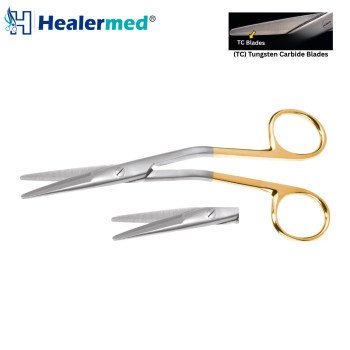
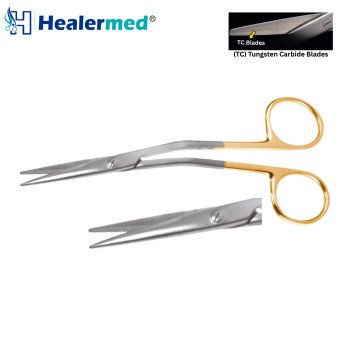
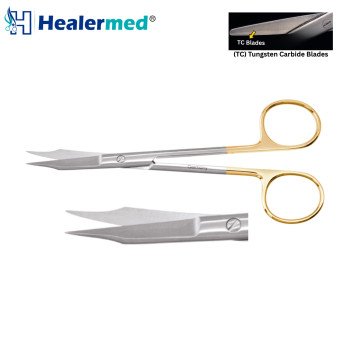
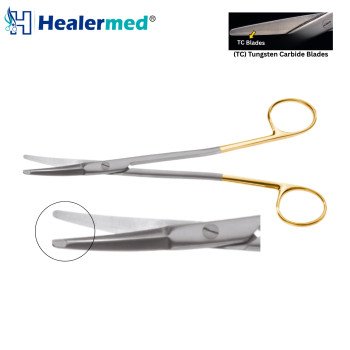
Gold ringsTungsten Carbide (TC) inserts
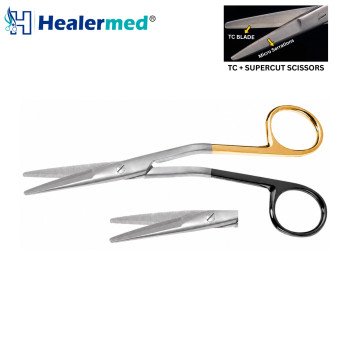
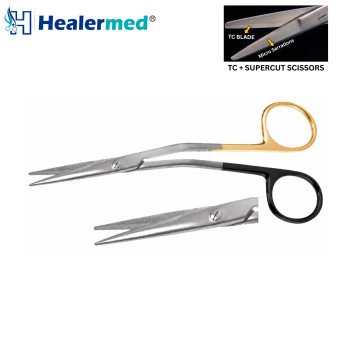
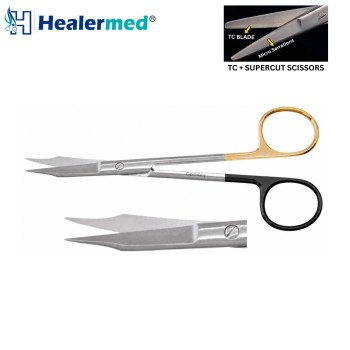
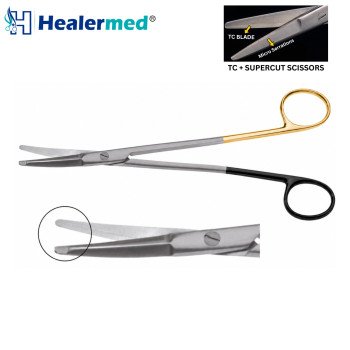
Gold + BlackTC blade + SuperCut blade
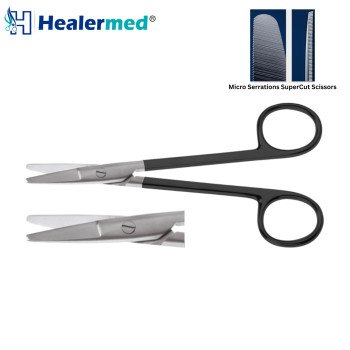
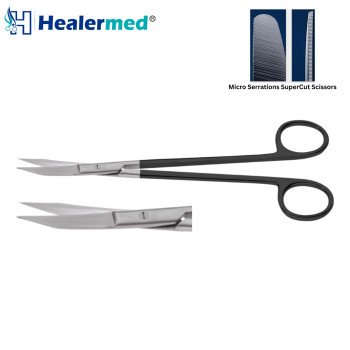
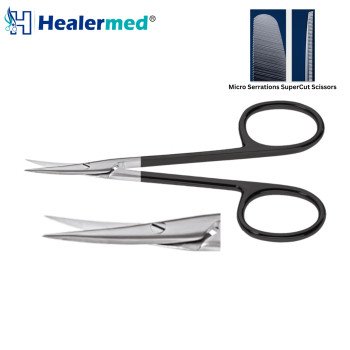
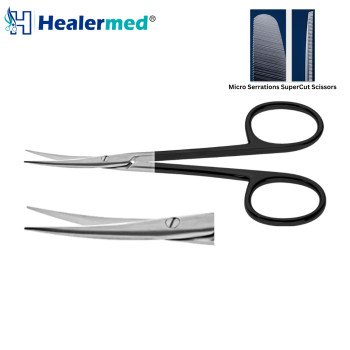
Black ringsSuperCut micro-serrated edge
Blade Technologies

The four plastic surgery scissor types

Every plastic surgery scissor falls into one of four blade families. The finger-ring colour identifies each one at a glance — a quick-reference convention used across the surgical instrument industry.

1

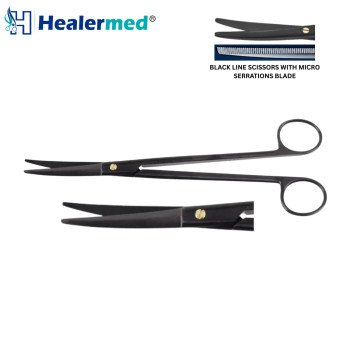
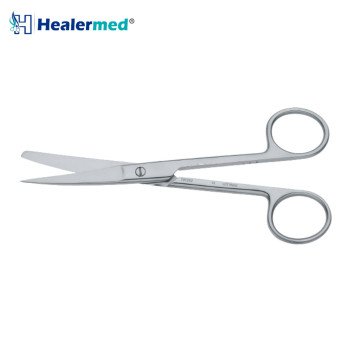
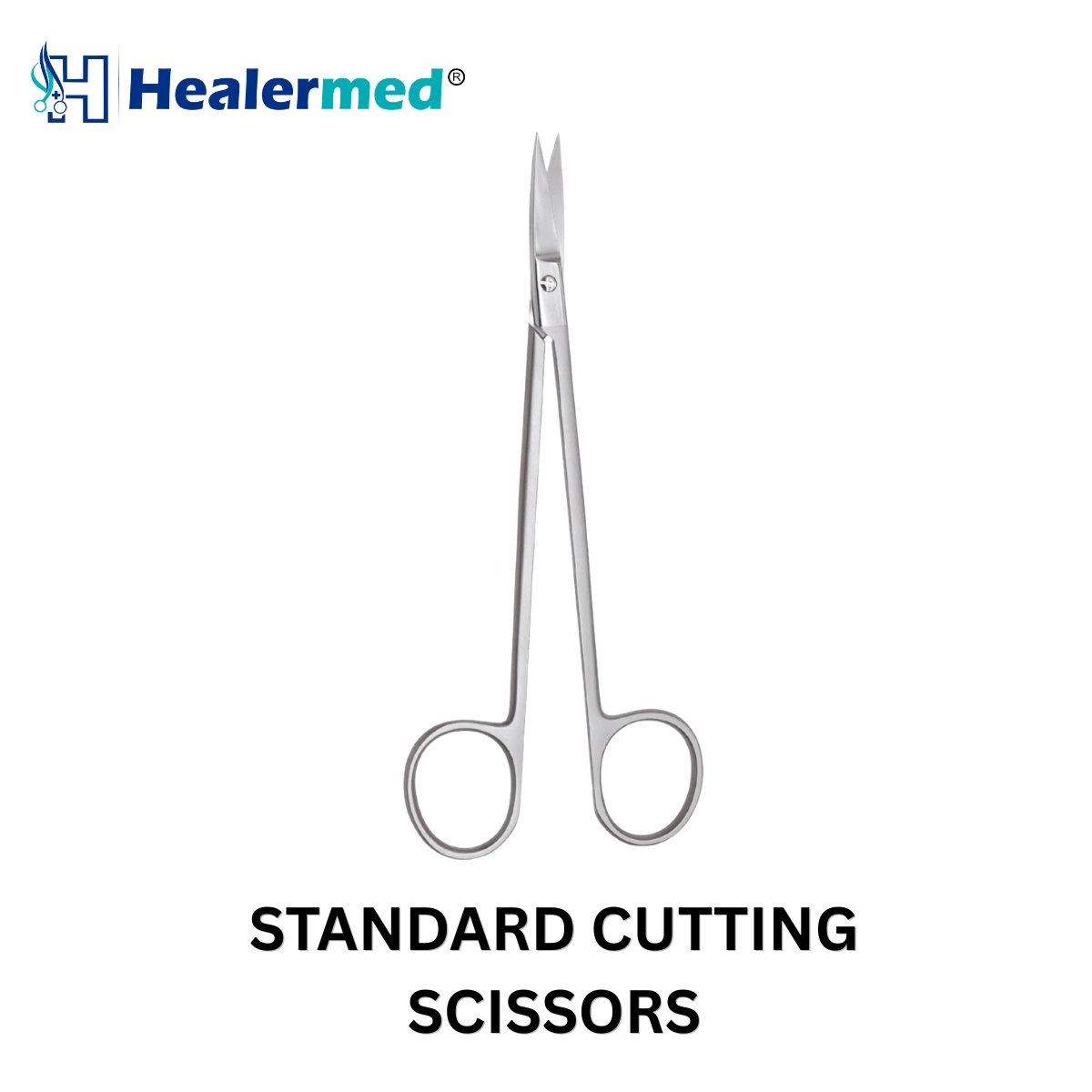
Standard Plastic Surgery Scissors

Two standard stainless-steel cutting blades. The everyday workhorse for general soft-tissue dissection and routine cutting in plastic and reconstructive procedures.

Plain steel finger rings — standard stainless blades.

Common Patterns

  • Metzenbaum
  • Iris
  • Stevens
  • Tenotomy
  • Littauer Stitch
  • Operating
  • Dissecting
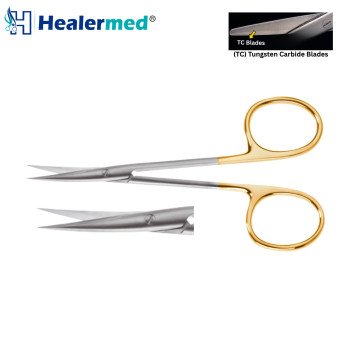
2

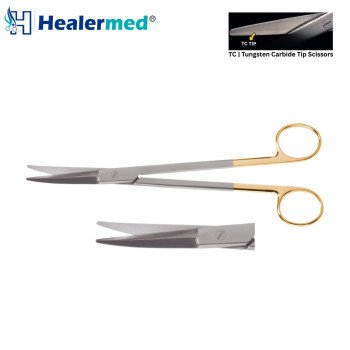
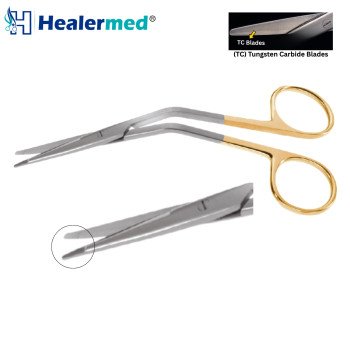
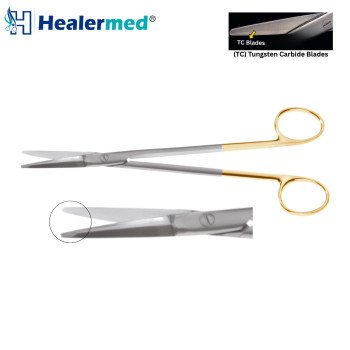
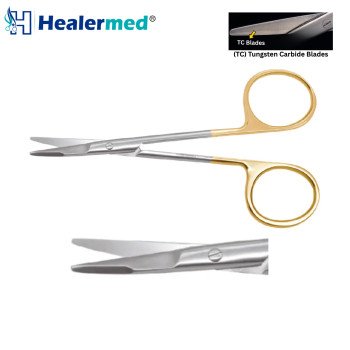
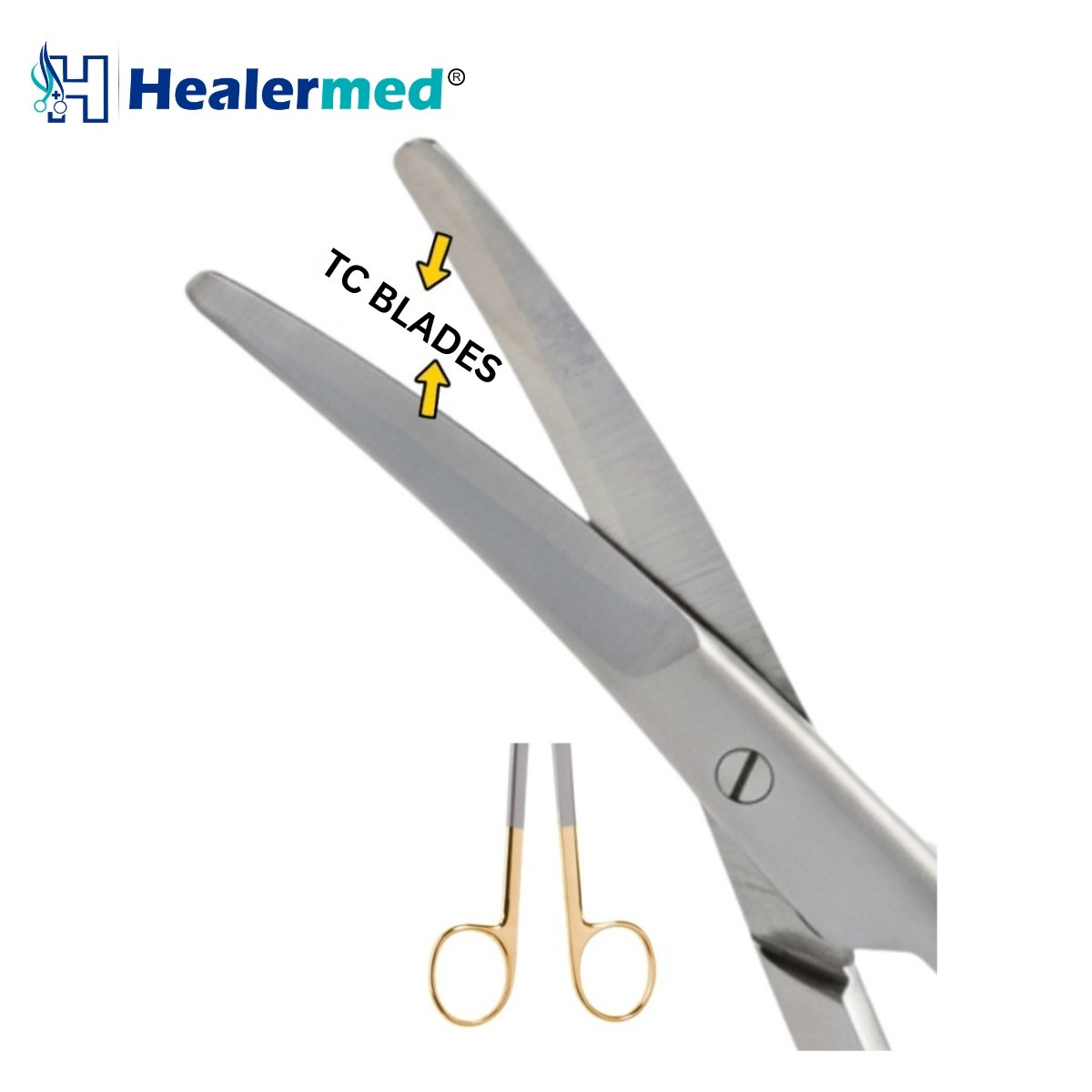
TC (Tungsten Carbide) Scissors

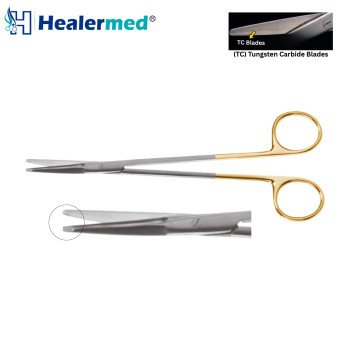
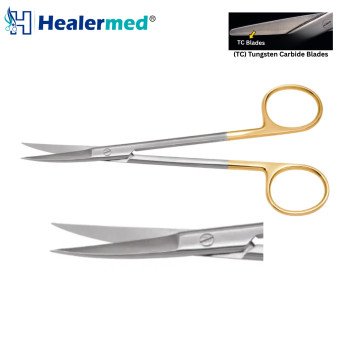
Tungsten carbide inserts bonded to both blades. They deliver exceptional sharpness, superior wear resistance and a far longer cutting life — typically up to five times that of standard stainless steel.

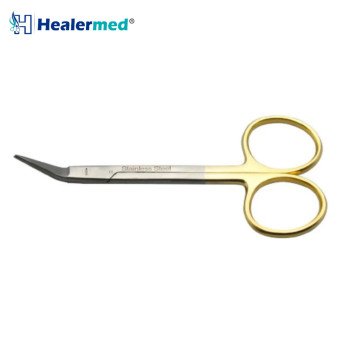
Gold finger rings — Tungsten Carbide (TC) inserts.

Benefits

  • Long-lasting sharp cutting edges
  • Superior wear resistance
  • Excellent cutting performance
  • Extended service life and lower cost-per-use
3

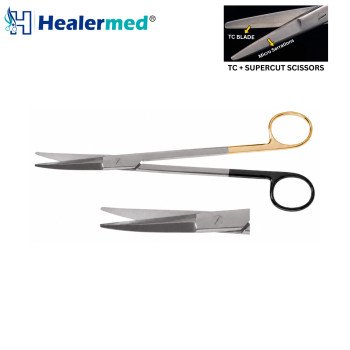
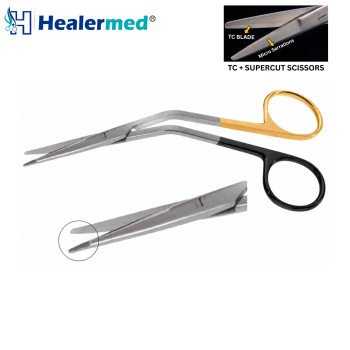
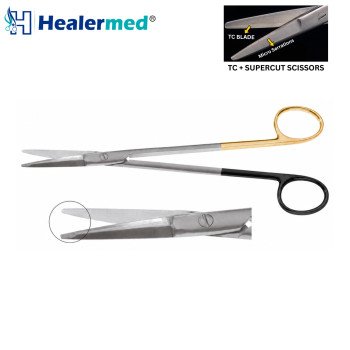
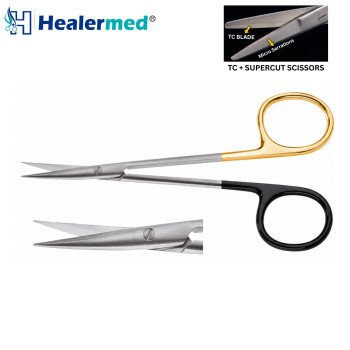
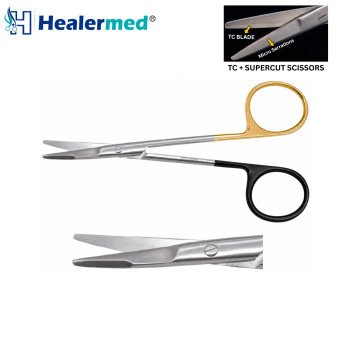
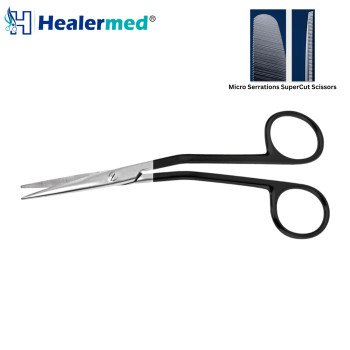
TC Plus SuperCut Scissors

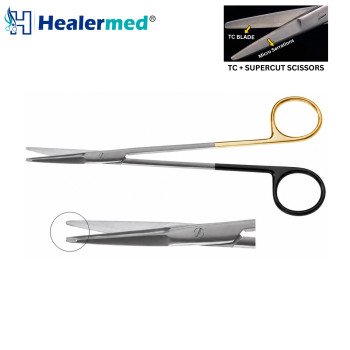
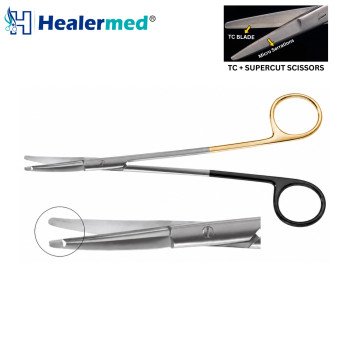
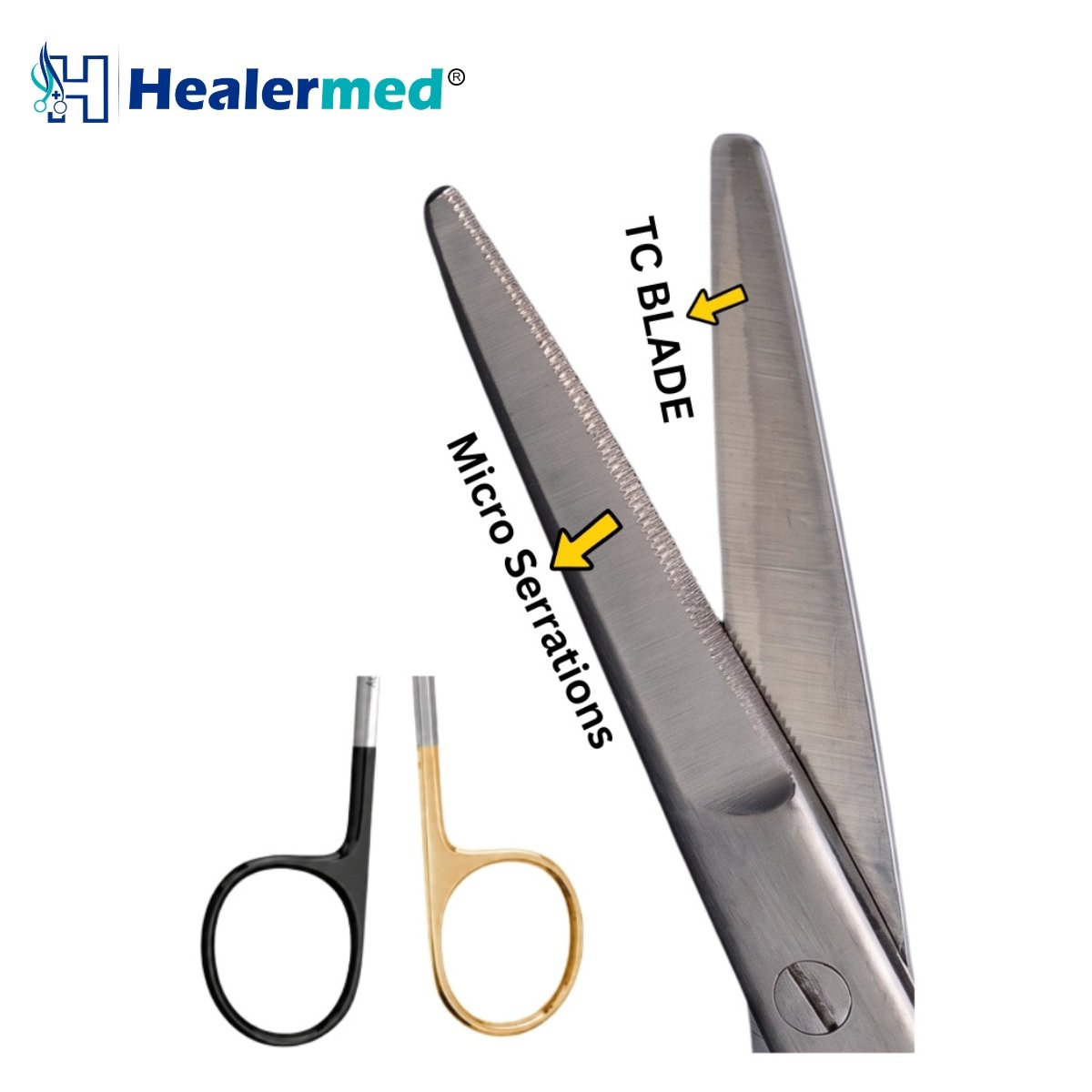
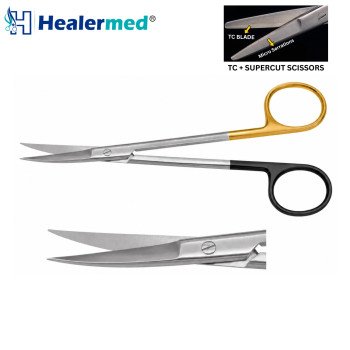
The premium combination: one blade carries a tungsten carbide insert, the opposing blade is micro-serrated. You get carbide durability plus an anti-slip cutting edge for extremely precise, smooth, effortless cutting — a top choice in plastic surgery.

Gold ring = TC blade  •  Black ring = SuperCut blade.

Benefits

  • Extremely sharp cutting performance
  • Anti-slip micro-serrated blade
  • Excellent control and precision
  • Long-lasting carbide cutting edge
  • Highly preferred by plastic surgeons
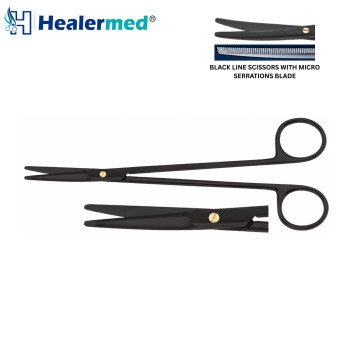
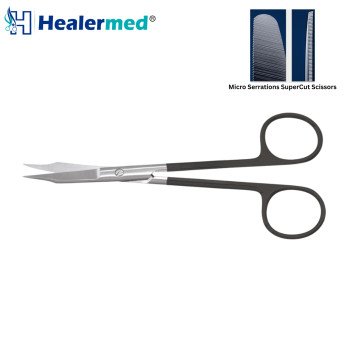
4

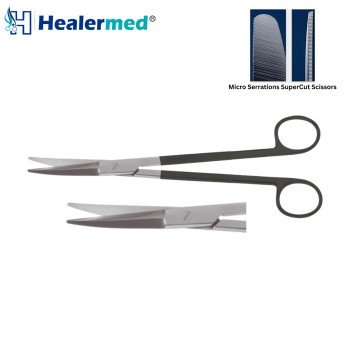
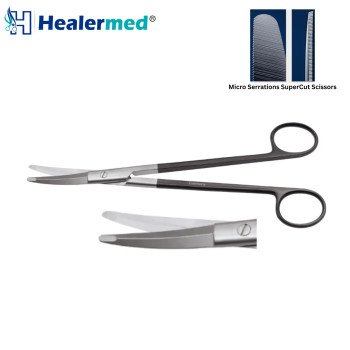
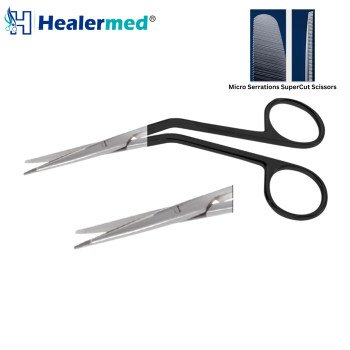
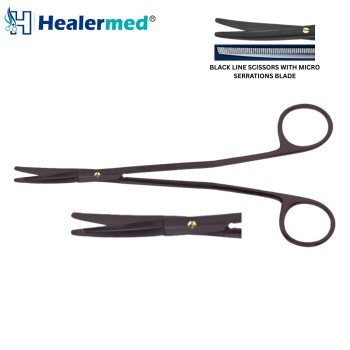
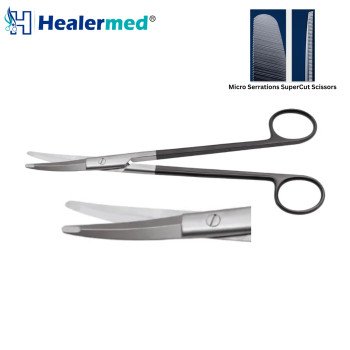
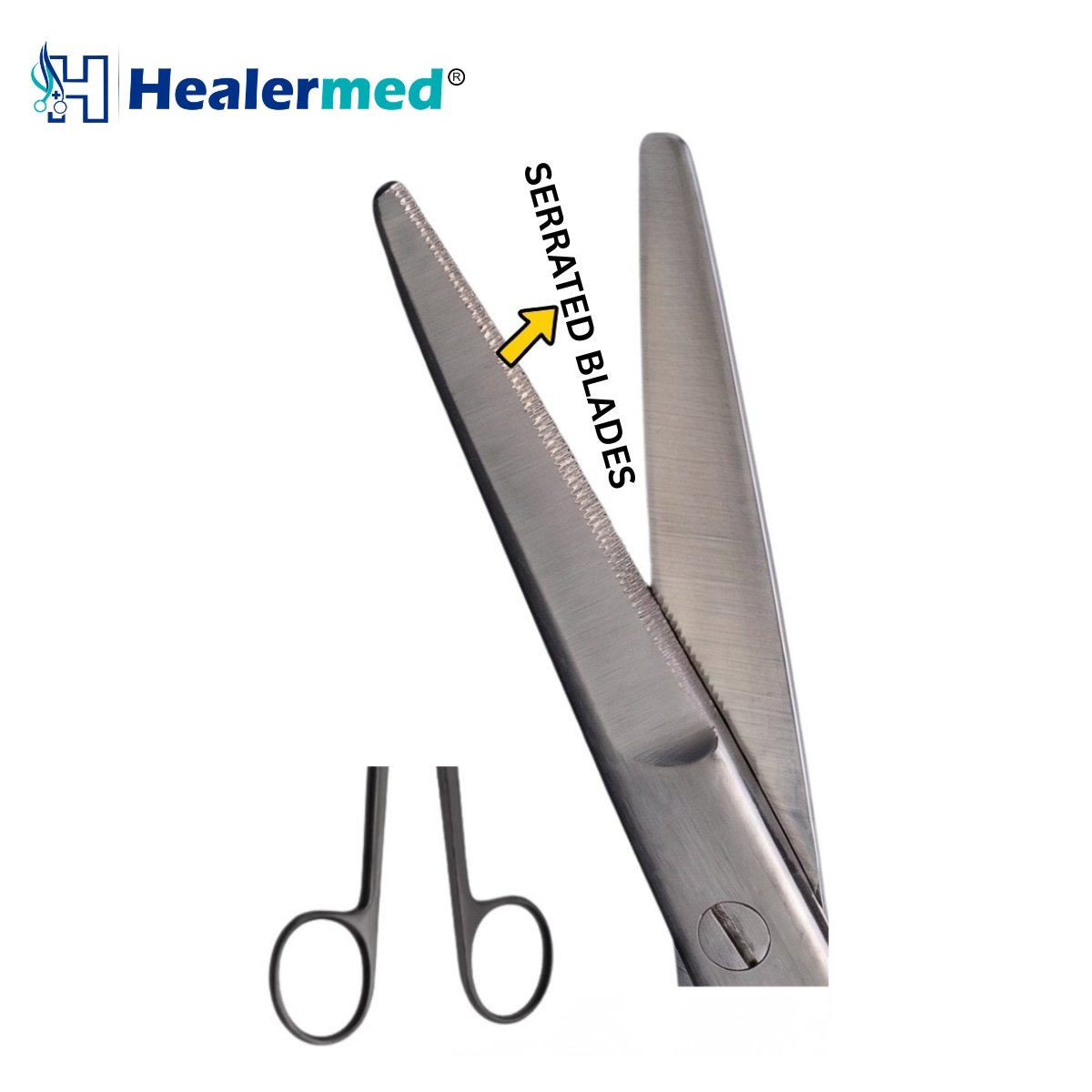
SuperCut Scissors

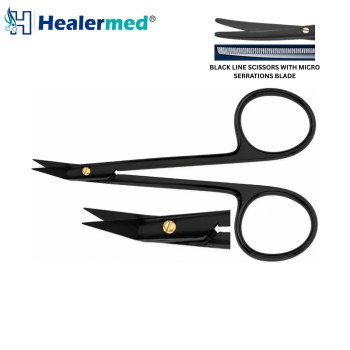
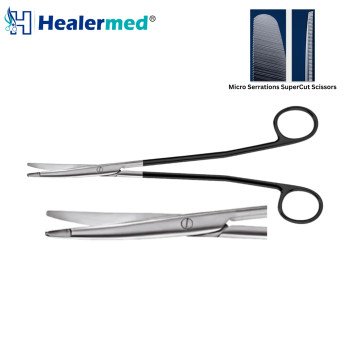
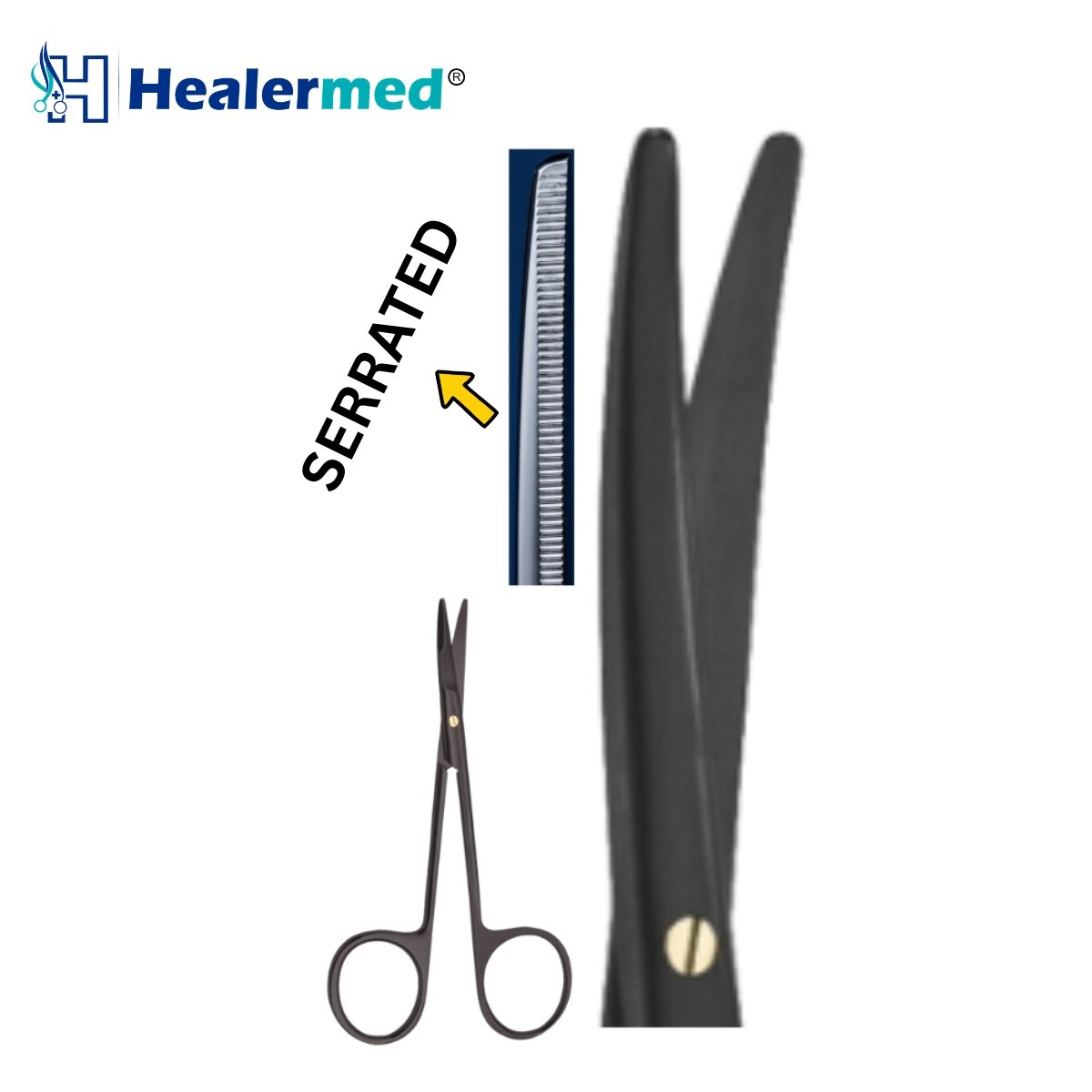
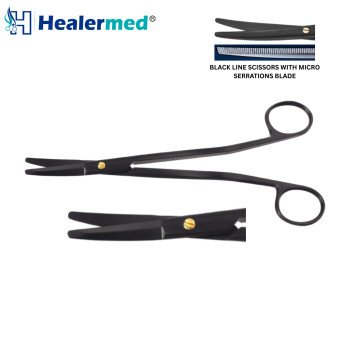
One micro-serrated blade paired with one razor-sharp blade. The micro-serrations grip tissue to prevent slipping while the sharp edge delivers clean, precise cuts — ideal for delicate dissection.
Black finger rings — SuperCut micro-serrated edge.

Benefits

  • Anti-slip cutting action
  • Exceptional cutting precision
  • Smooth tissue dissection
  • Reduced tissue slippage
  • Ideal for delicate surgical procedures
Patterns & Uses

Common plastic surgery scissor patterns

The same blade technologies are available across the patterns surgeons reach for most. Use this quick reference to match a pattern to the procedure.

Pattern Typical use Tip / blade Common size
Metzenbaum Soft-tissue dissection and undermining; long reach with high leverage Blunt; straight or curved 14–18 cm
Iris Fine, precise cutting of delicate tissue and sutures; microsurgical work Sharp, pointed; straight or curved 9–11.5 cm
Stevens Tenotomy Delicate dissection around curved structures; facial and hand surgery Slender, blunt or sharp; often curved 10–11.5 cm
Tenotomy Fine cutting in deep, narrow fields; controlled, low-trauma dissection Narrow, sharp or blunt 11–18 cm
Littauer Stitch Suture and stitch removal; the hooked beak lifts the suture One hooked blade 9–14 cm
Operating General cutting of tissue and sutures during routine surgery Sharp/sharp, sharp/blunt or blunt/blunt 11.5–16 cm
Dissecting Incisions, undermining and removal of skin and tissue Straight, angled or curved 11.5–18 cm
Construction

Materials & manufacturing

Surgical-grade stainless steel

Reusable plastic surgery scissors are forged from martensitic surgical stainless steel — typically grade 420 or 410 — chosen for the balance of hardness, edge retention and corrosion resistance needed to survive repeated steam sterilization. German surgical steel is the long-standing benchmark for this class of instrument.

Healermed scissors are precision-forged, hardened, hand-finished and individually inspected so the blades shear cleanly and the pivot moves smoothly through years of clinical use.

Tungsten carbide inserts

For TC and TC Plus SuperCut scissors, tungsten carbide inserts are bonded to the cutting edges and honed to a razor finish. Carbide is significantly harder than stainless steel, so the edge holds far longer — meaning fewer resharpens, less downtime and a lower cost-per-use over the instrument's life.

The gold finger rings are the standard visual marker that an instrument carries tungsten carbide cutting edges.

Selection Guide

How to choose the right plastic surgery scissors

Work through four questions to narrow the pattern, blade technology and configuration before you order.

Tissue & depth

Heavier soft tissue and deeper fields suit Metzenbaum or longer dissecting patterns. Fine, superficial work calls for Iris, Stevens or tenotomy.

Precision needed

For delicate facial, hand and aesthetic work, choose fine sharp-tipped patterns. For general cutting, operating scissors are versatile.

Edge life

High-volume use favours tungsten carbide (gold rings) for long edge retention. Occasional use can run standard stainless.

Tissue control

When tissue tends to slip, a SuperCut or TC Plus SuperCut micro-serrated blade (black ring) grips and cuts cleanly.

Curved vs. straight

Curved blades follow anatomical contours and improve visibility when dissecting around structures. Straight blades give precise linear cuts and suture trimming. Many patterns are offered in both.

Sharp vs. blunt tips

Sharp tips allow precise piercing and fine dissection; blunt tips protect delicate membranes and reduce the risk of inadvertent injury during blunt dissection. Combinations (sharp/blunt) cover mixed tasks.

Care & Sterilization

Cleaning, sterilization & maintenance

Daily handling

  • Clean and rinse promptly after use; remove all tissue and bio-burden before sterilization.
  • Steam-sterilize (autoclave) in a pouch left slightly ajar so steam reaches every surface.
  • Lubricate the pivot/box-lock periodically with medical-grade instrument lubricant for smooth action.
  • Inspect blades, tips and joints before each use; retire or resharpen damaged instruments.

Tungsten carbide & SuperCut cautions

  • For TC (gold-ring) instruments, avoid cold/chemical sterilants and solutions containing benzyl ammonium chloride, which degrade carbide inserts.
  • SuperCut razor edges nick easily — handle gently and never drop. Use only for tissue, not sutures or wire.
  • Resharpen at regular intervals to preserve cutting performance and instrument life.
  • Store dry, after washing in neutral-pH water, to minimise corrosion at the cutting edge.
Manufacturer · Sialkot, Pakistan

Why source plastic surgery scissors from Healermed Instruments

Healermed Instruments manufactures and exports a complete range of plastic surgery scissors — Standard, Tungsten Carbide, SuperCut and TC Plus SuperCut — in every common pattern, size and tip configuration. As a direct manufacturer in Sialkot, the world's surgical-instrument hub, we supply hospitals, clinics, distributors and procurement teams worldwide with factory pricing, consistent quality and OEM flexibility.

FDA CGMPISO 13485ISO 9001CE Mark
Browse Scissors Request a Bulk Quote
Who We Serve

Trusted by surgical buyers worldwide

From single-clinic orders to OEM and wholesale supply, Healermed Instruments serves the full surgical procurement chain.

Plastic & Reconstructive Surgeons Cosmetic & Aesthetic Surgeons Hospitals & Teaching Hospitals Plastic Surgery & Surgical Clinics Hospital Procurement Officers Medical Device Distributors & Importers Surgical Supply Wholesalers Universities & Medical Training Programs Surgical Residents & Medical Students OR Nurses & Surgical Technologists Veterinary Surgeons
FAQ

Plastic surgery scissors — frequently asked questions

What do the gold and black finger rings on surgical scissors mean?

Gold finger rings indicate tungsten carbide (TC) cutting inserts, which stay sharp far longer than stainless steel. Black finger rings indicate a SuperCut micro-serrated blade that grips tissue to prevent slipping. A scissor with one gold and one black ring is a TC Plus SuperCut — a tungsten carbide blade paired with a micro-serrated SuperCut blade.

What is the difference between Metzenbaum and Iris scissors?

Metzenbaum scissors have longer handles, blunt tips and a high handle-to-blade ratio for soft-tissue dissection over deeper or larger areas. Iris scissors are small, sharp-tipped instruments for fine, precise cutting of delicate tissue and sutures in confined fields. Plastic surgery sets usually include both.

Are tungsten carbide scissors worth the extra cost?

For regular or high-volume use, yes. Tungsten carbide edges last roughly five times longer than stainless steel, so although the upfront price is higher, fewer resharpens and replacements lower the cost-per-use over the instrument's life. For occasional use, standard stainless steel can be more economical.

What are SuperCut scissors used for?

SuperCut scissors pair a razor-sharp blade with a micro-serrated opposing blade. The serrations hold tissue so it does not slip during the cut, giving clean, precise dissection. They are well suited to delicate plastic and reconstructive procedures where tissue control matters.

What size are plastic surgery scissors?

Most plastic surgery scissors are around 6 inches (15 cm) to fit the surgeon's hand and typical dissection depth. Finer 4-inch patterns are common for periorbital, ophthalmic-plastic and microsurgical work. Pattern and procedure determine the exact length.

How do you sterilize and maintain surgical scissors?

Clean immediately after use, then steam-sterilize in an autoclave with the instrument in a pouch left slightly ajar. Lubricate the pivot periodically, inspect before every use, and store dry. For tungsten carbide instruments, avoid cold or chemical sterilants that can damage the carbide inserts.

What material are surgical scissors made from?

Reusable surgical scissors are forged from martensitic surgical-grade stainless steel, commonly grade 420 or 410, for hardness and corrosion resistance. Tungsten carbide versions add bonded carbide inserts on the cutting edges for far longer edge life.

Does Healermed Instruments supply OEM and wholesale orders?

Yes. As a direct manufacturer in Sialkot, Pakistan, Healermed Instruments supplies plastic surgery scissors at factory pricing for retail, bulk, wholesale and OEM/private-label orders, backed by FDA CGMP, ISO 13485, ISO 9001 and CE-marked quality systems. Contact us for a quote.

Educational resource by Healermed Instruments — surgical instrument manufacturer, Sialkot, Pakistan. Ring-colour conventions follow standard surgical instrument industry practice (gold = tungsten carbide, black = SuperCut micro-serration).

Healermed Instruments

Sales & Support

Online now

Can't find the instrument you're looking for?

Contact us with your requirements — we manufacture & supply a wide range of surgical instruments.

WhatsApp
Healermed Support
Sales Agent · Online

Chat on WhatsApp