
Related Instruments
Liposuction Cannulas and Accessories › Accessories For Liposuction
Accessories For Liposuction
Handles, trocars, skin ports, harvesting syringes, stands, decanting and nanofat equipment, sterilization boxes
A liposuction cannula does one job in a case that has a dozen. These are the instruments around it: what drives it, what makes the access incision, what holds the vacuum, what separates the graft from the fluid it came out with, and what keeps the set straight between cases. Every item is German stainless steel and reusable, and every one is made by Healermed Instruments.
At a Glance
- Range: 33 reusable liposuction accessories
- Covers: Harvesting, vacuum control, decanting, fat transfer, handles, access, storage
- Material: German stainless steel
- Sterilization: Fully reusable, steam autoclavable to 134°C
- Custom: Sizes, port counts and engraved branding on request
- Manufacturer: Healermed Instruments, Sialkot, Pakistan
Liposuction Accessories by Stage of the Case
The accessories below are grouped by where they are used, not by what they are made of. Most of a fat transfer case is handling — harvesting, holding, separating, transferring — and the equipment for that decides how much of the graft is still worth injecting at the end.
Fat Harvesting Syringes and Vacuum Locks
Hold negative pressure mechanically so the surgeon is not maintaining suction by hand through a whole donor site.
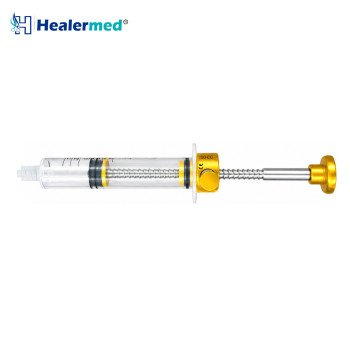
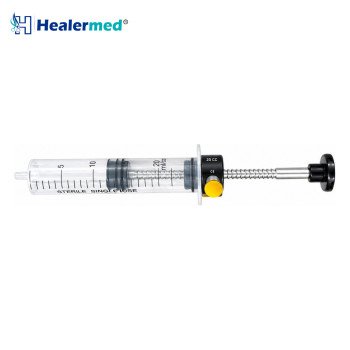
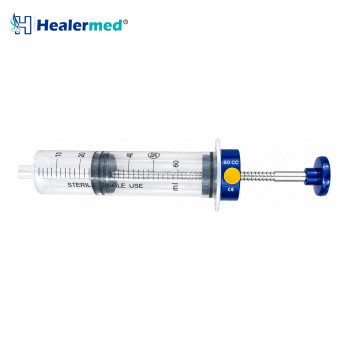
| Auto Lock Fat Harvesting Syringe 10cc Integrated lock holds the plunger as it is drawn — nothing to clip on. For facial and small-volume harvesting. |
Auto Lock Fat Harvesting Syringe 20cc The default harvesting size, with the lock built into the syringe. |
| Auto Lock Fat Harvesting Syringe 60cc Body harvesting at volume, where holding a plunger by hand stops being practical. |
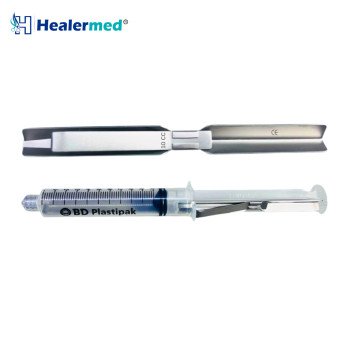
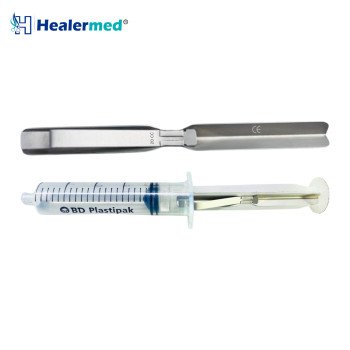
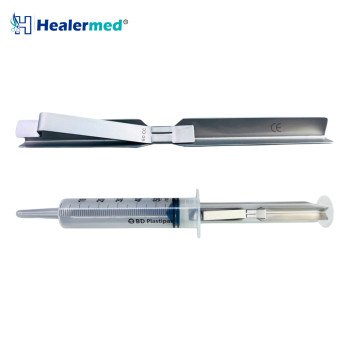
Syringe SnapLock Stop Lock 10cc Snaps onto a 10cc plunger to hold vacuum. Also sold as a stop lock or plunger lock. |
| Syringe SnapLock Stop Lock 20cc The same hold for 20cc syringes, where plunger force becomes significant. |
Syringe SnapLock Stop Lock 60cc Holds the highest plunger load in the range, for 60cc body harvesting. |
Syringe Stands and Racks
Filled syringes only separate cleanly if they stand upright and undisturbed. A rack also keeps the case in fill order.
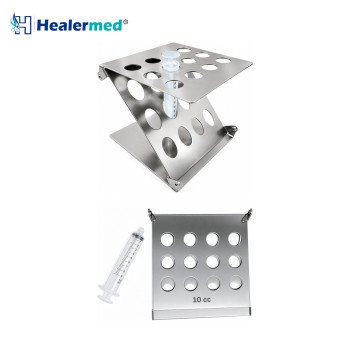
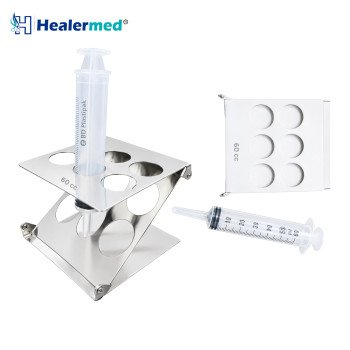
| Foldable Syringe Stand 12 Ports for 10cc Twelve ports for the many small syringes a facial harvest fills. Folds flat for the autoclave. |
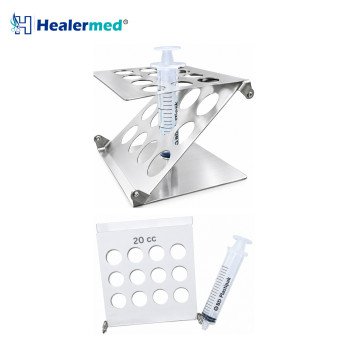
Foldable Syringe Stand 12 Ports for 20cc Holds a full facial or small body harvest without refilling the stand mid-case. |
| Foldable Syringe Stand 6 Ports for 60cc Six ports — a filled 60cc barrel is heavy, so stability matters more than count. |
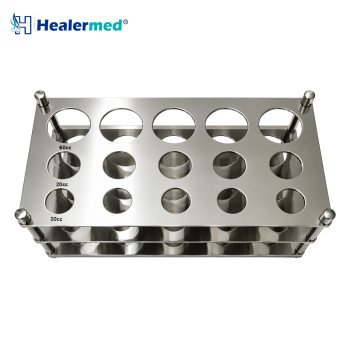
Universal Syringe Stand Rack 10cc, 20cc and 60cc Five ports of each size. One footprint instead of three separate single-size stands. |
| 6 Slot Luer Lock Syringe Stand Stainless steel stand with six Luer lock positions for fat transfer syringes. |
Decanting and Fat Collection
Harvested aspirate is fat mixed with tumescent fluid, blood and free oil. Only one of those is worth injecting.
| Decanting Stand 60cc to Luer Takes 60cc Toomey harvest syringes and drains through a Luer outlet, so the graft never leaves a closed path. |
Decanting Stand Luer to Luer Luer at both ends, for theatres working on a single connection standard throughout. |
| Fat Collection Jar 2000ml with Foldable Syringe Stand Collects aspirate in line and carries a foldable syringe stand for the processing stage. |
Fat Collection Jar 3500ml with Mesh Filter Larger canister with a mesh filter, for high-volume body harvesting before processing. |
Fat Transfer, Nanofat and Emulsification
Between harvest and injection the graft is moved, sheared and filtered. How much it is changed is decided here.
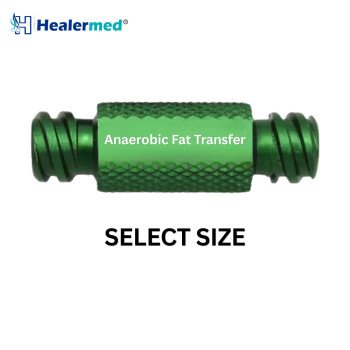
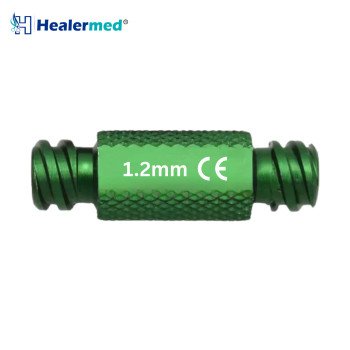
| Anaerobic Fat Transfer Adapters 1.0mm to 3.0mm Seven bores in a closed path. The bore decides whether the graft is emulsified or simply moved. |
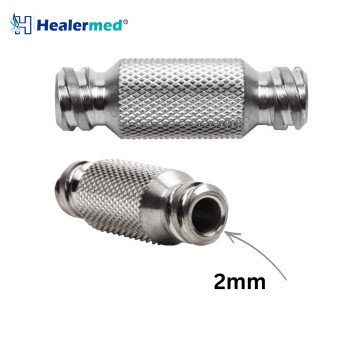
Luer Lock to Luer Lock Fat Transfer 2mm Low-shear transfer: combines harvest syringes and loads injection syringes without decanting. |
| Nano Fat Transfer Set – Long Pattern Extended channel for more shear per pass, so a large harvest reaches nanofat in fewer passes. |
Nano Fat Transfer Set – Short Pattern Compact channel, much less plunger force, for small and moderate volumes. |
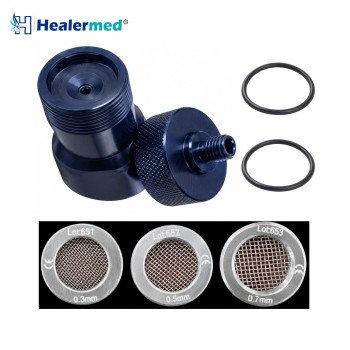
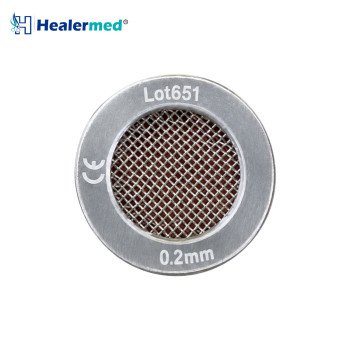
| Mesh Filters for Nano Fat Transfer 0.2mm to 0.8mm Seven grades. The mesh sets the largest particle that will pass the injection cannula. |
Liposuction Cannula Handles
A cannula hub is made for connecting, not for holding. A handle puts force along the shaft axis instead of around it.
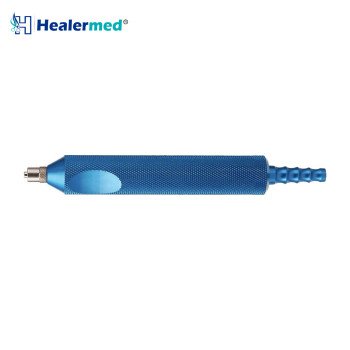
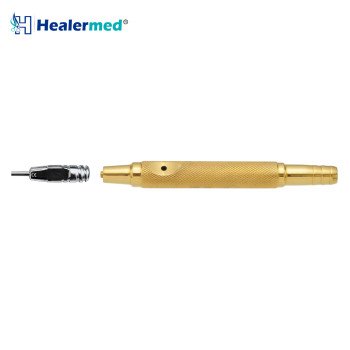
| Luer Lock Handle The base handle: female Luer lock, solid grip body, nothing to manage. |
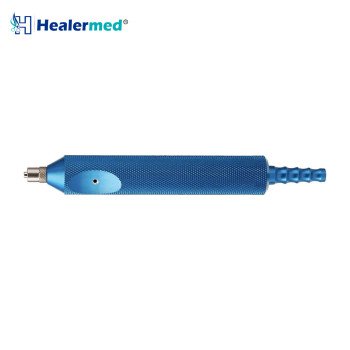
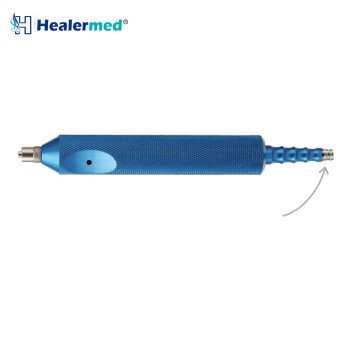
Luer Lock Handle with Thumb Hole A vent under the thumb moves vacuum control from the machine to the hand. |
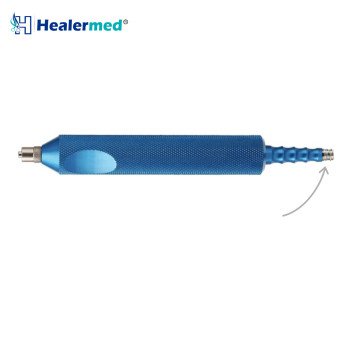
| Luer Lock Handle with Male Luer Lock End A male Luer at the rear connects straight into tubing or a syringe, with no adapter joint to leak. |
Thumb Hole and Male Luer Handle Both at once: a sealed direct line and hand-controlled suction in one instrument. |
| Luer Lock Stainless Steel Handle All-steel Luer lock handle built for heavy autoclave cycles. |
Luer Lock Stainless Steel Thumb Hole Handle Steel construction with the thumb vent for suction control at the hand. |
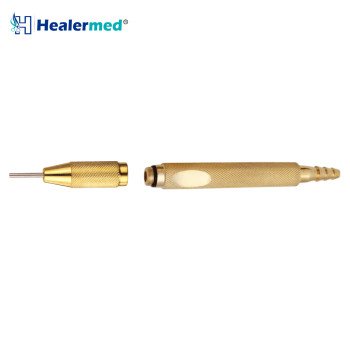
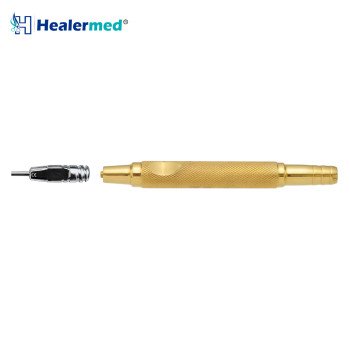
| Threaded Hub Handle A machined screw thread seats the cannula with no rotational play, so a directional tip holds its aim. |
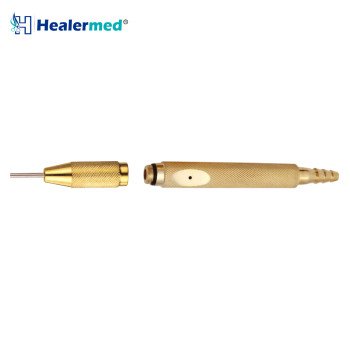
Threaded Hub Thumb Hole Handle The rigid threaded joint plus a thumb vent — aim and draw controlled from the same hand. |
Access and Skin Protection
The access incision is made once and lived with for the whole case, and afterwards by the patient.
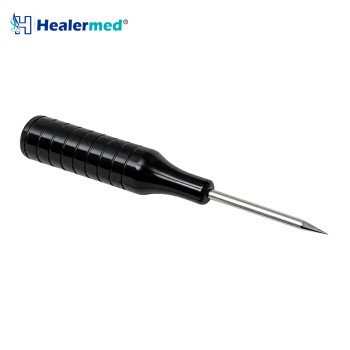
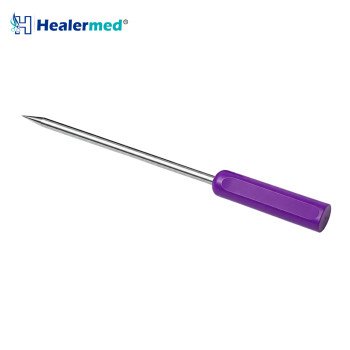
| Liposuction Trocar 3.0mm with Round Handle A punch, not a blade: it removes a disc matched to the cannula so the opening seals around the shaft. |
Liposuction Trocar 3.0mm with Square Handle The same 3.0mm punch with flat faces for repeatable pressure through fibrous skin. |
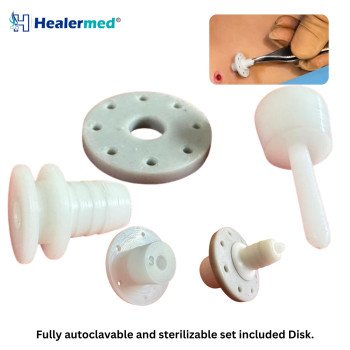
| Skin Ports for Liposuction, Reusable Skin Protectors Line the access site so hundreds of cannula passes abrade the port instead of the skin edge. |
Sterilization and Storage
Loose cannulas roll against heavier instruments. Bent shafts, nicked ports and dented hubs do not announce themselves.
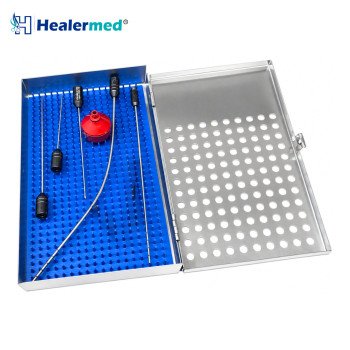
| Sterilization Storage Box 28 x 18 x 2.5cm Holds 20 liposuction cannulas up to 25cm, each in its own position. |
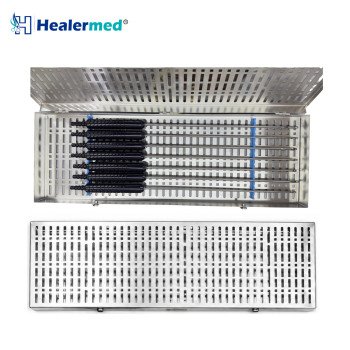
Sterilization Storage Box 60 x 20 x 4.5cm 60cm length takes 30cm and 35cm shafts; 4.5cm depth clears fitted power handles. |
What Decides Whether a Graft Survives the Handling
Three things, and all of them are accessories rather than cannulas. The first is vacuum consistency: a plunger held by a tiring hand lets suction fall away gradually, so the last part of a syringe is harvested at lower pressure than the first. A mechanical lock removes that.
The second is separation. What comes out of a donor site is fat mixed with tumescent fluid, blood and free oil. Left standing upright and undisturbed it separates by density, and the fluid is drawn off. Skip it, and the volume placed looks correct at the end of the case and undercorrected a week later, because the fluid is gone.
The third is shear. Every transfer between syringes forces the graft through a channel, and the narrower that channel the more the fat parcels break down. That is exactly what you want when preparing nanofat and exactly what you want to avoid when placing structural graft, which is why the transfer adapters are made in seven bores rather than one.
Material and Sterilization
Every liposuction cannula is made from German stainless steel with a passivated surface that resists corrosion through repeated cleaning cycles. All instruments are fully reusable and steam autoclavable to 134°C. Flush the lumen and every port immediately after use, before fat and tumescent residue set inside the shaft, and confirm water runs from each opening before drying. Inspect the port edges and the hub thread at every cycle: a dulled edge tears fat rather than cutting it, and a worn hub leaks under vacuum. Neither failure is visible from outside, which is why the check matters more on a cannula than on a solid instrument.
|
Buy online Factory-direct pricing, straight from the manufacturer. |
Wholesale & OEM Distributor, importer or hospital group? Bulk pricing, OEM manufacturing and custom branding. |
Contact Healermed Instruments
| Manufacturer Healermed Instruments Surgical instruments manufacturer and exporter Sialkot, Pakistan |
Certifications FDA CGMP · ISO 13485 ISO 9001 · CE Mark German stainless steel throughout |
| Retail buyers Surgeons and clinics order online at factory-direct prices. Worldwide shipping, samples available on request. |
Wholesale buyers Distributors, importers and hospital groups: send your specification and quantities for bulk pricing, OEM manufacturing and custom branding. |
Why Buy Liposuction Cannulas Direct From the Manufacturer
Healermed Instruments manufactures every liposuction cannula in this range at its own facility in Sialkot, Pakistan, and ships worldwide. Buying direct removes the importer and distributor layer that sits between most surgeons and the factory, which is where the majority of the price on an imported cannula comes from. Production runs under an ISO 13485 and FDA CGMP quality system, with ISO 9001 and CE Mark certification. OEM manufacturing and custom branding are available for distributor and brand-owner orders.
More From the Liposuction Range
| Complete Sets for Liposuction Cannulas Procedure-built sets for face, breast and buttock fat transfer, accessories included. |
| Quick Shop Liposuction Cannulas One parent product per cannula family on a single page. |
Frequently Asked Questions
Which handle fits my liposuction cannula?
Match the handle to the cannula hub. Luer lock handles take cannulas with a Luer lock hub; threaded handles take cannulas made with a threaded fitting. A Toomey hub or a machine-specific hub does not use a handle of either type.
What is the difference between a SnapLock stop lock and an auto lock syringe?
A stop lock is a separate part that clips onto an ordinary syringe plunger and has to be fitted after the draw and removed before expelling. An auto lock syringe has the mechanism built in, so the draw and the hold are one movement and there is no small part to sterilize and keep track of.
Why decant harvested fat at all?
Because tumescent fluid contributes volume that disappears within days of injection. A graft placed without separating looks correct at the end of the case and undercorrected a week later. Free oil and blood add nothing and are inflammatory in the recipient site.
Which mesh filter size should I use for nanofat?
Match it to the injection cannula and the plane. The 0.2mm to 0.4mm grades suit intradermal and thin periorbital placement, 0.5mm is the general nanofat grade, and 0.6mm to 0.8mm suit subdermal work. Finer is not better: every pass through a finer mesh stresses the tissue and yields less usable volume.
Are the accessories autoclavable?
Yes. Every item is German stainless steel and steam autoclavable to 134°C. Dismantle and flush anything with an internal channel immediately after use, since emulsified fat and tumescent residue set far faster than whole parcels.
Can accessories be made to our own specification?
Yes. Sizes, port counts, capacities and engraved branding are available on request for distributor and OEM orders. Send your specification through the wholesale request page and our production team will confirm what can be produced.