
Related Instruments
Ear tuning forks are used for hearing tests such as the Rinne and Weber tests, for bone conduction tests and for testing the sense of vibration. Healermed makes 29: French low-frequency forks, Hartmann forks with and without dampers from C 64 to C5 4096 Hz, Hartmann and Lucae forks with foot, alloy forks, the Koenig A 109 Hz fork, and neurological forks including the Rydel-Seiffer and a neuro combination. This category is part of Ear Surgery Instruments under ENT Surgical Instruments.
At a Glance
- Instruments in range: 29
- Patterns: French, Hartmann, Lucae, Alloy, Rydel-Seiffer, Neuro, Koenig
- Material: Stainless steel or lightweight alloy
- Cleaning: Wipe clean and disinfect
- Manufacturer: Healermed Instruments, Sialkot, Pakistan
Medical Tuning Forks for Hearing Tests, 16 Hz to 4096 Hz
All Ear Tuning Forks in the Range
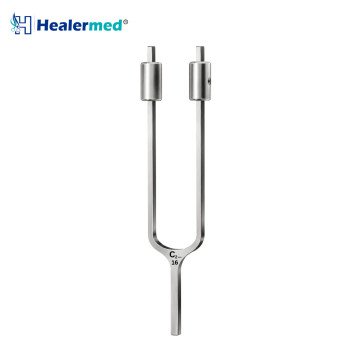
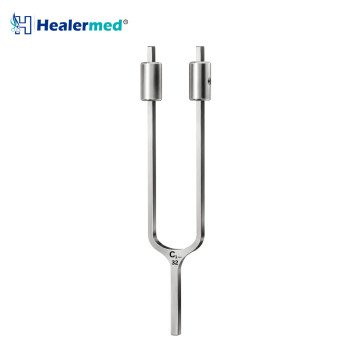
French Tuning Forks: C2 16 Hz and C1 32 Hz
French tuning forks are large, low-frequency forks: C2 at 16 Hz and C1 at 32 Hz, the lowest notes in the Healermed range.
Very low frequencies are felt as much as heard, so these forks are used to check the lowest end of hearing and the sense of vibration. Their size and weight give a long, strong vibration.
- French Tuning Fork C2 16 Hz
- French Tuning Fork C1 32 Hz
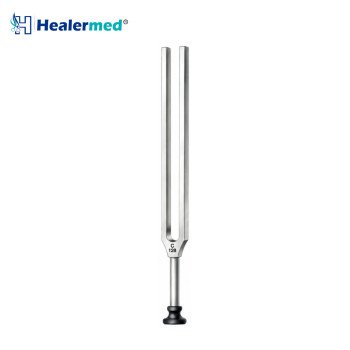
Hartmann Tuning Forks with Dampers
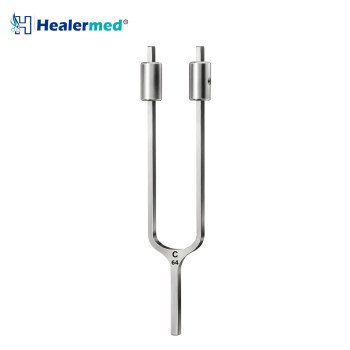
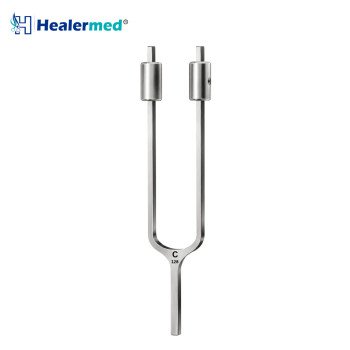
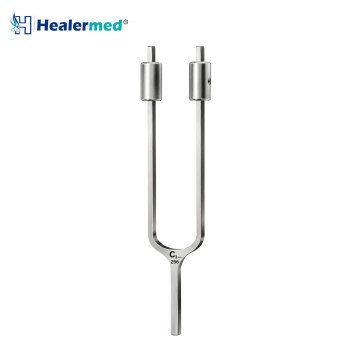
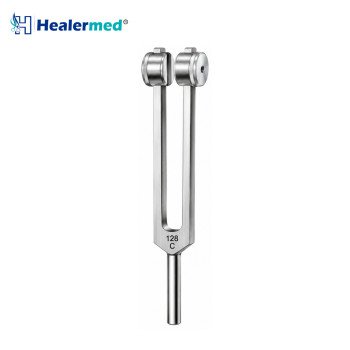
Hartmann tuning forks with dampers have weights on the ends of the prongs. The dampers cut out the overtones, so the fork gives a cleaner, steadier low tone that lasts longer.
They are made at C 64 Hz, C 128 Hz and C1 256 Hz, the low frequencies where a pure tone matters most. The 128 Hz damped fork is also widely used to test vibration sense.
The same notes are also made without dampers, for doctors who prefer a plain fork.
- Hartmann Tuning Fork C 64 Hz with Damper
- Hartmann Tuning Fork C 128 Hz with Damper
- Hartmann Tuning Fork C1 256 Hz with Damper
Hartmann Tuning Forks, C 128 to C5 4096 Hz
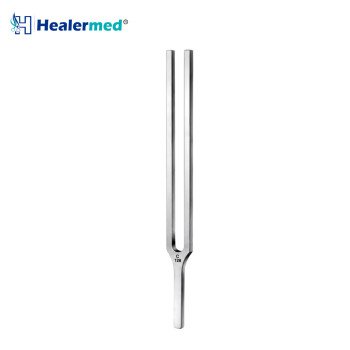
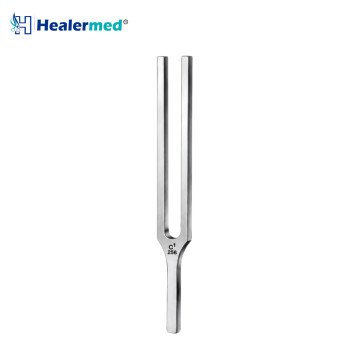
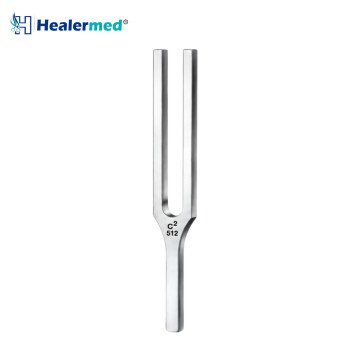
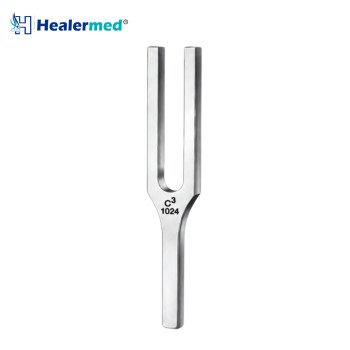
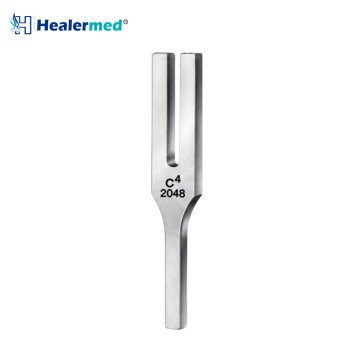
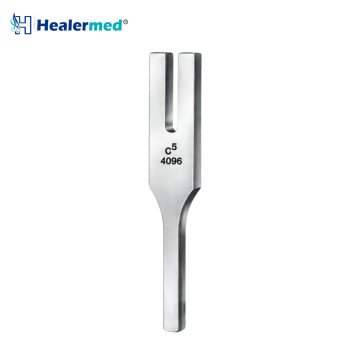
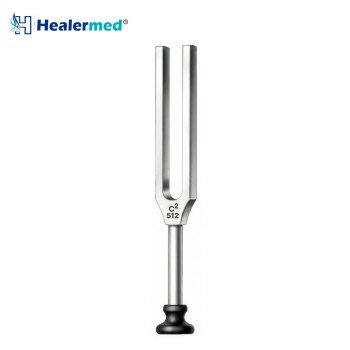
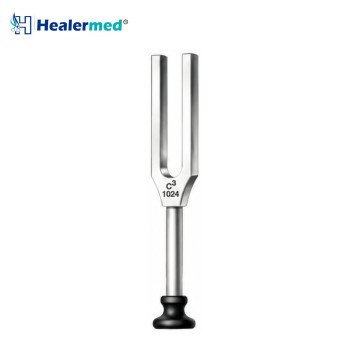
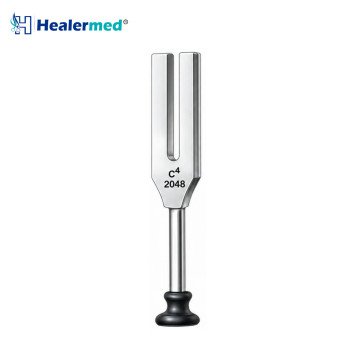
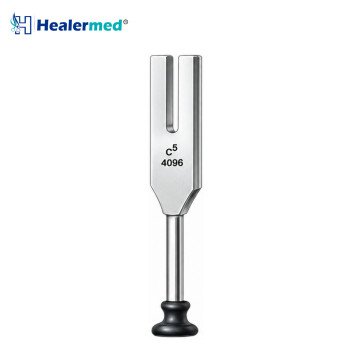
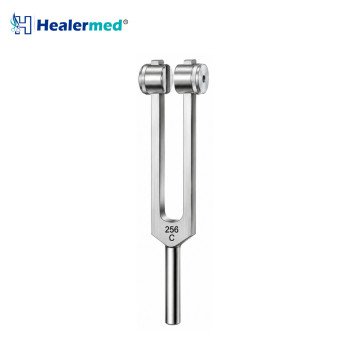
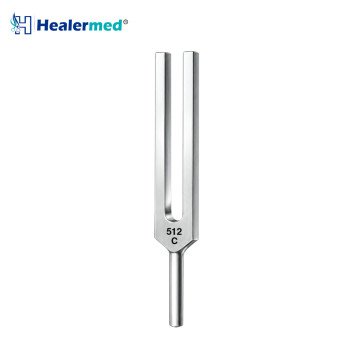
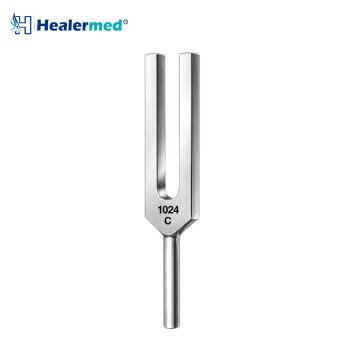
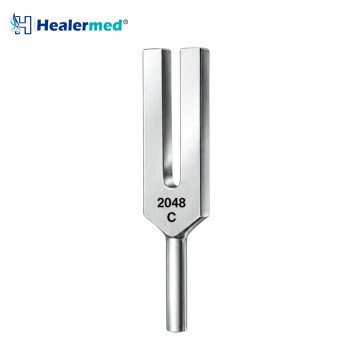
Hartmann tuning forks are the classic ENT tuning forks for hearing tests, made in a full series from C 128 Hz to C5 4096 Hz.
Each fork gives one note. Testing with several forks shows which frequencies a patient hears and how well, and helps tell conductive hearing loss from sensorineural hearing loss.
The 512 Hz fork is the one most used for the Rinne and Weber tests. The low forks (128 and 256 Hz) also test vibration sense, and the high forks (1024 to 4096 Hz) check the upper range. The C 128 Hz fork is also made with movable points.
- Hartmann Tuning Fork C 128 Hz
- Hartmann Tuning Fork C 128 Hz with Movable Points
- Hartmann Tuning Fork C1 256 Hz
- Hartmann Tuning Fork C2 512 Hz
- Hartmann Tuning Fork C3 1024 Hz
- Hartmann Tuning Fork C4 2048 Hz
- Hartmann Tuning Fork C5 4096 Hz
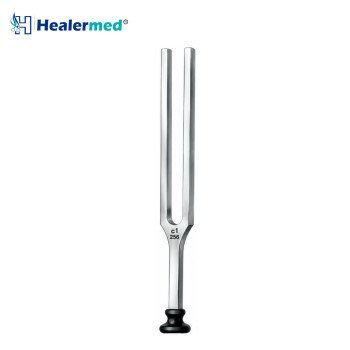
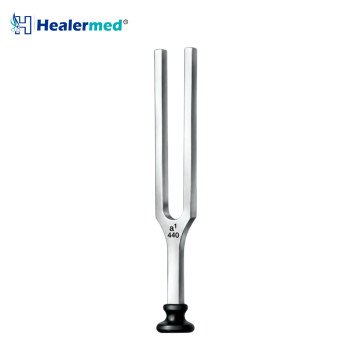
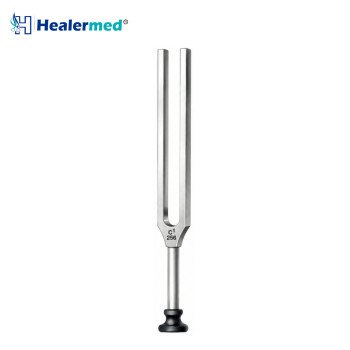
Hartmann Tuning Forks with Foot
Hartmann tuning forks with foot have a flat foot plate on the end of the stem, so the fork can be pressed firmly on the mastoid bone, the forehead or the teeth.
The foot passes the vibration into the bone cleanly, which makes bone conduction tests such as the Weber and Rinne tests more reliable. Healermed makes it at C1 256 Hz and at a1 440 Hz, concert pitch A.
- Hartmann Tuning Fork with Foot C1 256 Hz
- Hartmann Tuning Fork with Foot a1 440 Hz
Lucae Tuning Forks with Foot
Lucae tuning forks have a foot plate on the stem for firm contact with the bone, and are made in a full series from C 128 Hz to C5 4096 Hz.
The foot passes the vibration into the mastoid, forehead or teeth for bone conduction tests, and the series covers the frequencies used for hearing assessment. The C 128 Hz fork is also made with movable rods.
- Lucae Tuning Fork with Foot C 128 Hz
- Lucae Tuning Fork with Foot C1 256 Hz
- Lucae Tuning Fork with Foot C2 512 Hz
- Lucae Tuning Fork with Foot C3 1024 Hz
- Lucae Tuning Fork with Foot C4 2048 Hz
- Lucae Tuning Fork with Foot C5 4096 Hz
- Lucae Tuning Fork with Foot C 128 Hz with Movable Rods
Alloy Tuning Forks
Alloy tuning forks are made from a lightweight alloy, so they are light in the hand and give a clear tone.
The 128 and 256 Hz forks have dampers for a clean low tone; the 512, 1024 and 2048 Hz forks are plain. They are a practical, lighter choice for clinics, students and general practice.
- Alloy Tuning Fork with Dampers C 128 Hz
- Alloy Tuning Fork with Dampers C 256 Hz
- Alloy Tuning Fork C 512 Hz
- Alloy Tuning Fork C 1024 Hz
- Alloy Tuning Fork C 2048 Hz
Koenig Tuning Fork with Foot
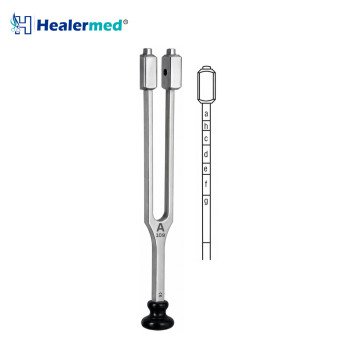
The Koenig tuning fork with foot gives the note A at 109 Hz, with a foot plate for firm contact with the bone.
The low A note and the foot plate suit low-frequency and bone conduction testing in ENT and audiology.
- Koenig Tuning Fork with Foot A 109 Hz
Neurological Tuning Forks: Rydel-Seiffer and Neuro Combination
Neurological tuning forks test the sense of vibration and, in combination instruments, reflexes and skin sensation.
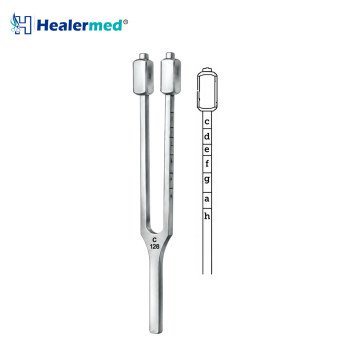
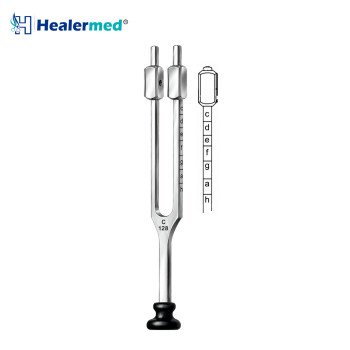
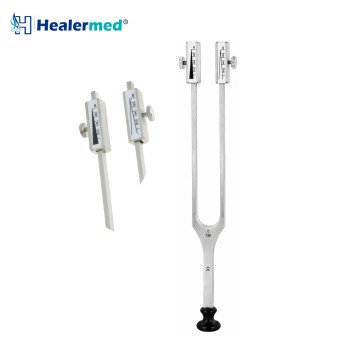
The Rydel-Seiffer tuning fork has graduated dampers with a scale, so the doctor can read how long the patient feels the vibration. It is widely used to screen for nerve damage in the feet, for example in diabetes.
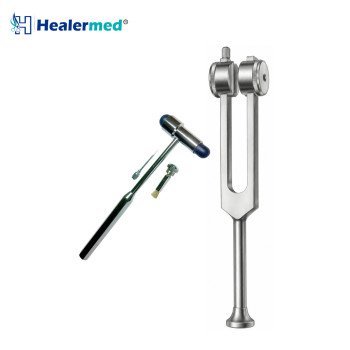
The neuro combination joins a tuning fork with a reflex hammer, a pinwheel, a brush and a wheel, so reflexes, touch, pain sensation and vibration can be tested with one instrument.
- Rydel-Seiffer Tuning Fork with Foot C 128 Hz
- Tuning Fork with Hammer, Pinwheel, Brush and Wheel for Neuro
Specifications
| Instrument | Ear Tuning Forks |
| Patterns | French, Hartmann, Lucae, Alloy, Rydel-Seiffer, Neuro, Koenig |
| Material | Stainless steel or lightweight alloy |
| Reusable | Yes — wipe clean and disinfect |
| Custom frequencies | Made on request |
| Compliance | FDA CGMP, ISO 13485, ISO 9001, CE Mark |
Clinical Uses
- Testing hearing at the lowest frequencies
- Vibration sense testing
- Audiology and ENT clinics
- Low-frequency hearing tests
- Rinne and Weber hearing tests
- Vibration sense testing (128 Hz)
- ENT and audiology clinics
- Checking hearing across frequencies
- Telling conductive from sensorineural hearing loss
- ENT and general practice
- Bone conduction tests
- Clinics, students and general practice
- Screening for nerve damage (neuropathy)
- Reflex and sensation testing (neuro combination)
- Neurology, diabetes and general practice
Care and Cleaning
Wipe the tuning fork with a soft cloth and a surface disinfectant after each patient, and dry it. Strike it only on a soft surface such as a rubber pad or the knee, never on a table or metal: hard knocks can change the pitch. Store it so the prongs do not touch other instruments.
🛒 Shop Online
Every size in this category is listed below this description with its price. Open any item to order single pieces online.
Browse all Ear Surgery Instruments ›
📦 Shop Bulk
Hospitals, distributors and importers get factory-direct pricing, mixed sizes in one order, OEM and private-label branding, and samples on request.
Why Buy Direct From the Manufacturer
Made by Healermed Instruments, a surgical instrument manufacturer and exporter in Sialkot, Pakistan. Buying from the factory removes the importer and distributor margin. Production runs under an ISO 13485 and FDA CGMP quality system, with ISO 9001 and CE Mark certification. OEM manufacturing and private-label branding are available for distributors and brand owners.
Complete Ear Surgery Instrument Range
Every Healermed micro ear instrument, grouped by category. Part of the Ear Surgery Instruments range under ENT Surgical Instruments.
Micro Ear Forceps · 15 sizes · Straight, bent up, right and left jaws in 3 tip sizes
Micro Ear Cup Forceps · 8 sizes · Straight, bent up, right and left cups in 2 sizes
Micro Ear Nippers · 4 sizes · House-Dieter malleus nippers, 4 cutting directions
Wire Bending Forceps · 2 sizes · McGee forceps for stapes prosthesis wire
Fuller Prosthesis Introducing Forceps · 1 size · Holds and places a middle ear prosthesis
Wullstein Micro Ear Scissors · 4 items · 4mm blades, 9cm, straight, up, right, left
Bellucci Micro Ear Scissors · 4 items · 4mm blades, 8cm, straight, up, right, left
Shea-Bellucci Micro Ear Scissors · 4 items · 8mm blades, 8cm, straight, up, right, left
Micro Ear Knives · 12 knives · Sickle, roller, Rosen, Plester and Sexton ear knives
Micro Ear Needles · 12 needles · Politzer tympanum, Barbara and Rosen ear needles
Micro Ear Hooks · 26 hooks · Shambaugh, Schuknecht, Wullstein, McGee, Plester, Zenner and cerumen hooks
Micro Ear Dissectors · 8 dissectors · Austin, Fisch and Preyer sinus tympani dissectors
Stapes Instruments · 1 instrument · House measuring rods for stapes surgery
Foreign Body Instruments · 2 instruments · Moldenhauer and Zaufal foreign body levers
Periosteal Elevators · 2 elevators · Lempert periosteal elevator and Rosen micro ear elevator
Micro Ear Curettes and Scoops · 17 instruments · Lempert, House, Buck, Shapleigh, Barth, Jansen and Gross
Micro Ear Loops · 1 loop · Billeau ear loops in small, medium and large
Micro Ear Speculums · 17 speculums · Hartmann, Toynbee, Farrior and Zoellner ear speculums
Looking for nose or throat instruments? Browse all ENT Surgical Instruments, or go back to Ear Surgery Instruments.
Frequently Asked Questions
What are ear tuning forks used for?
Ear tuning forks are used for hearing tests such as the Rinne and Weber tests, for bone conduction tests and for testing the sense of vibration.
How do I clean a tuning fork?
Wipe it with a soft cloth and a surface disinfectant after each use, and dry it. Do not strike it on hard surfaces, because hard knocks can change the pitch.
What is the minimum order quantity for bulk orders?
The minimum order is agreed per order, not fixed. Send the model codes and quantities you need through the wholesale request page and we confirm the minimum for that order.
Do you provide samples?
Yes. Samples are available on request and the buyer pays the shipping. Tell us the model codes you want to check.
Can I order a custom size?
Yes. Other tip lengths, tip widths and working lengths can be made on request. Send your specification through the wholesale request page and our production team will confirm.