
Related Categories
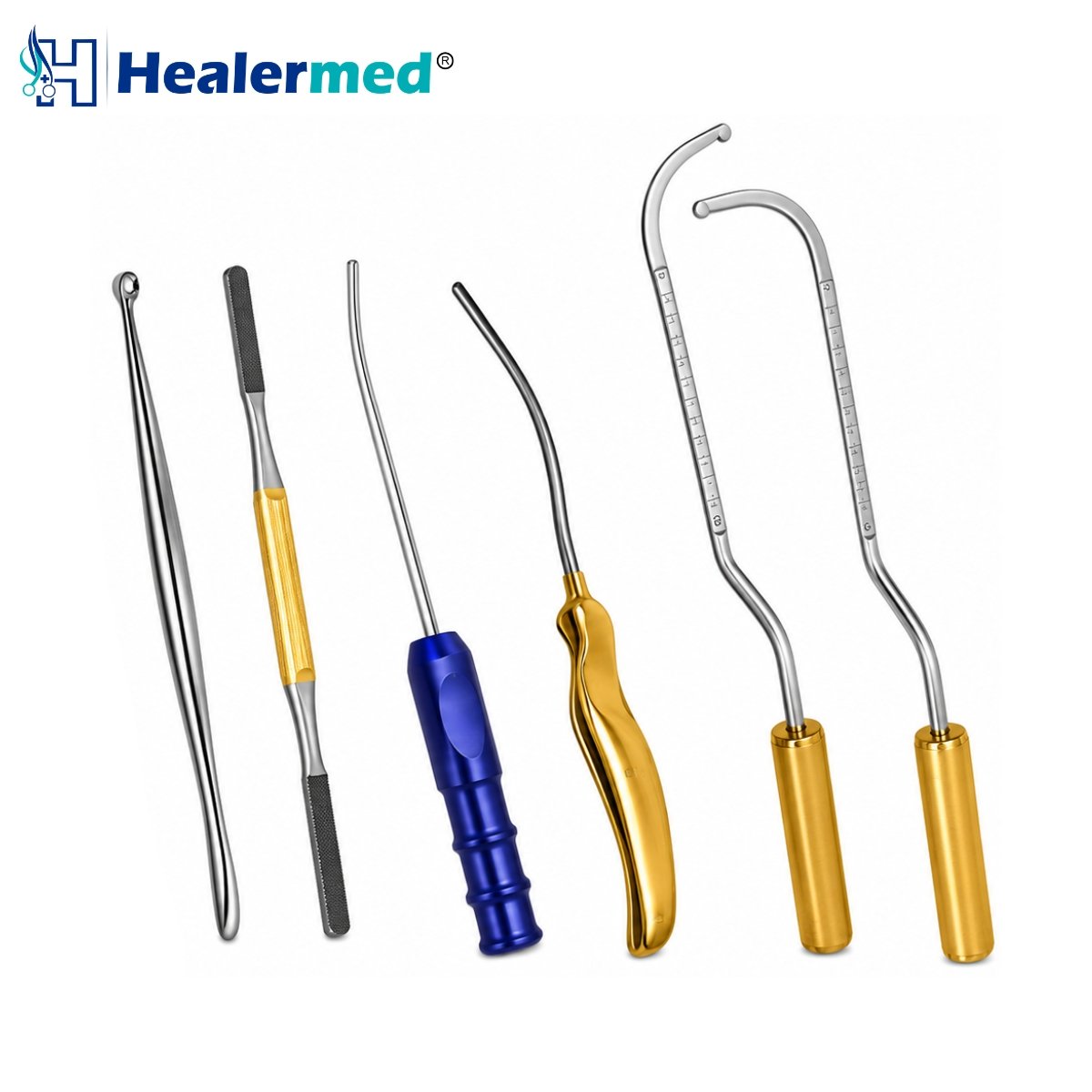
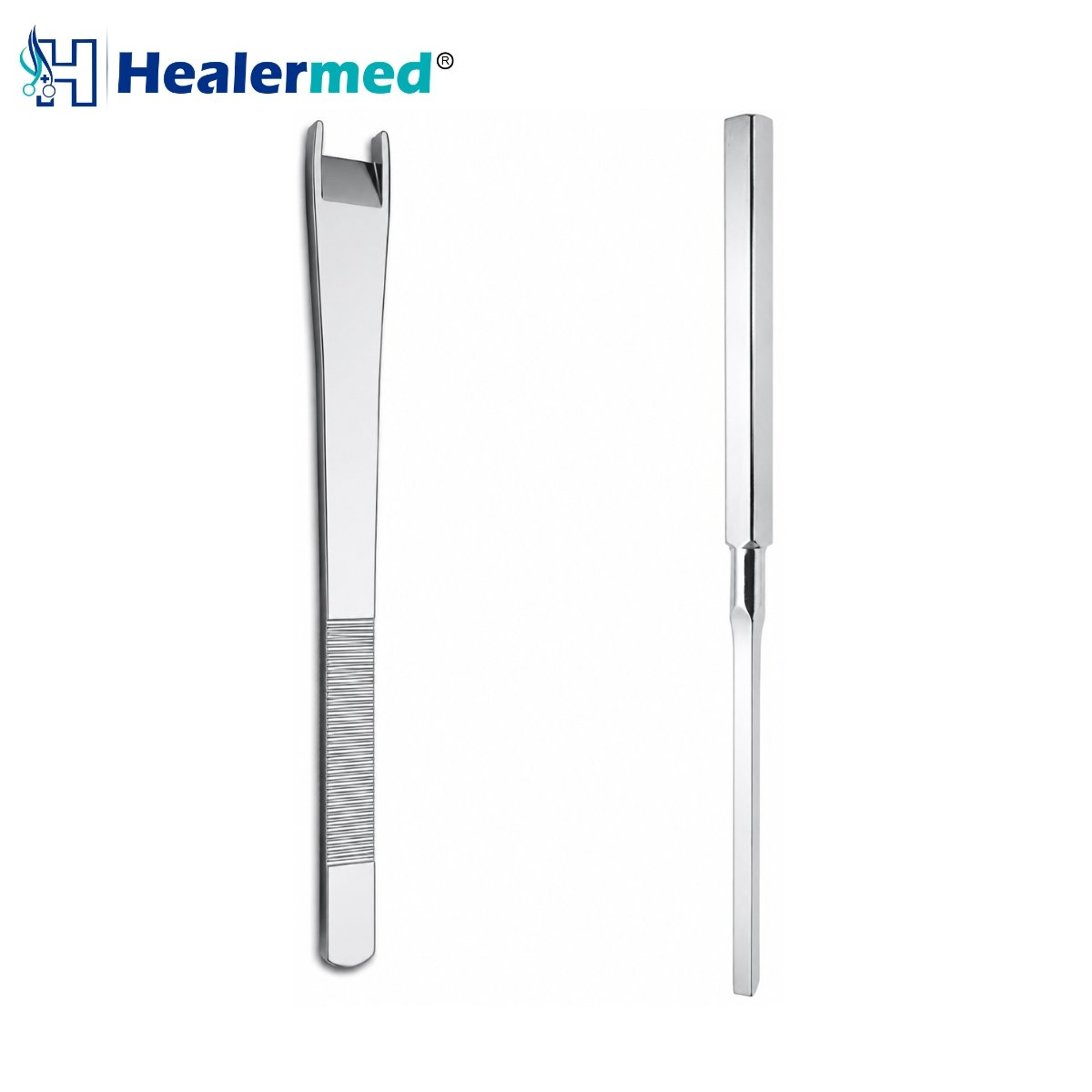
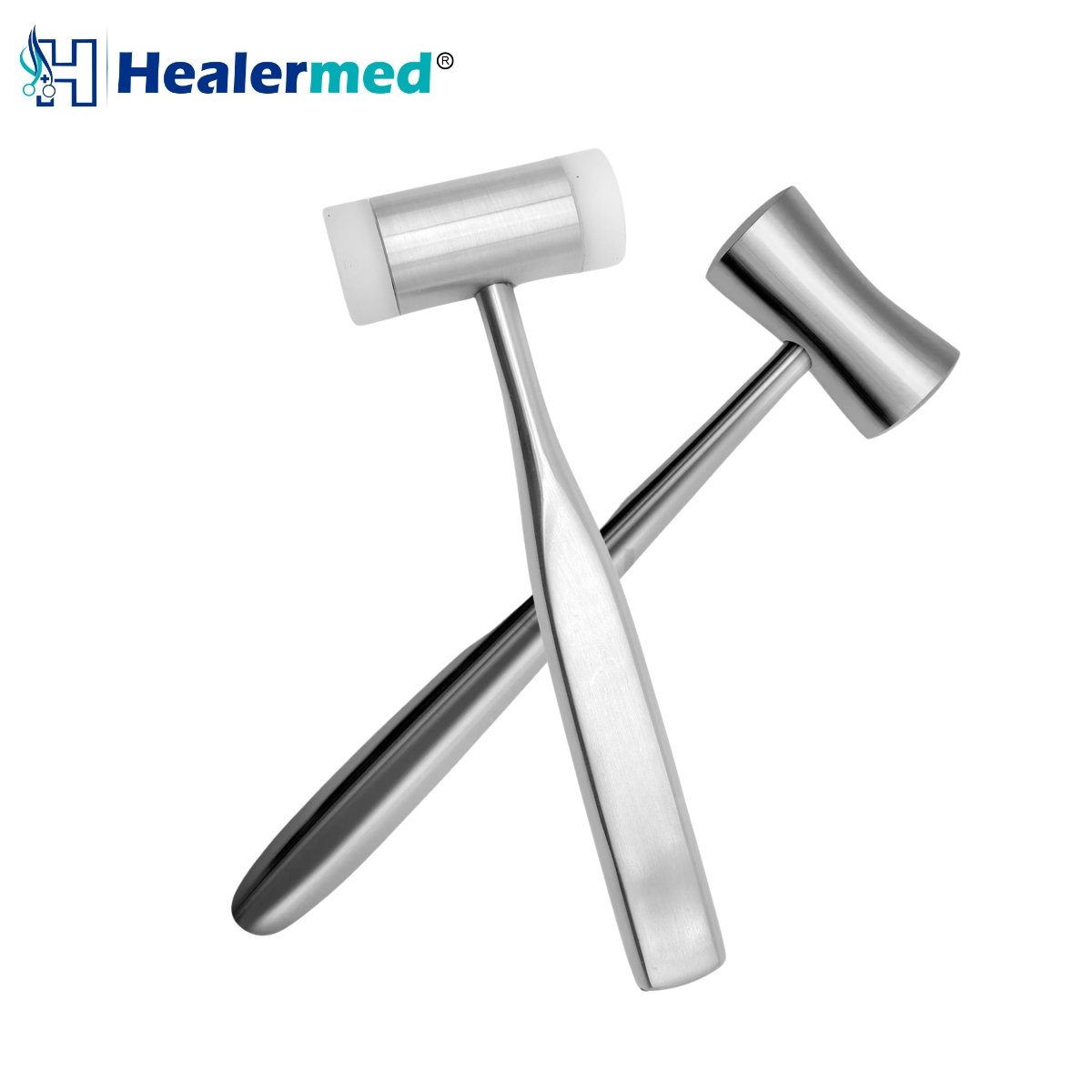
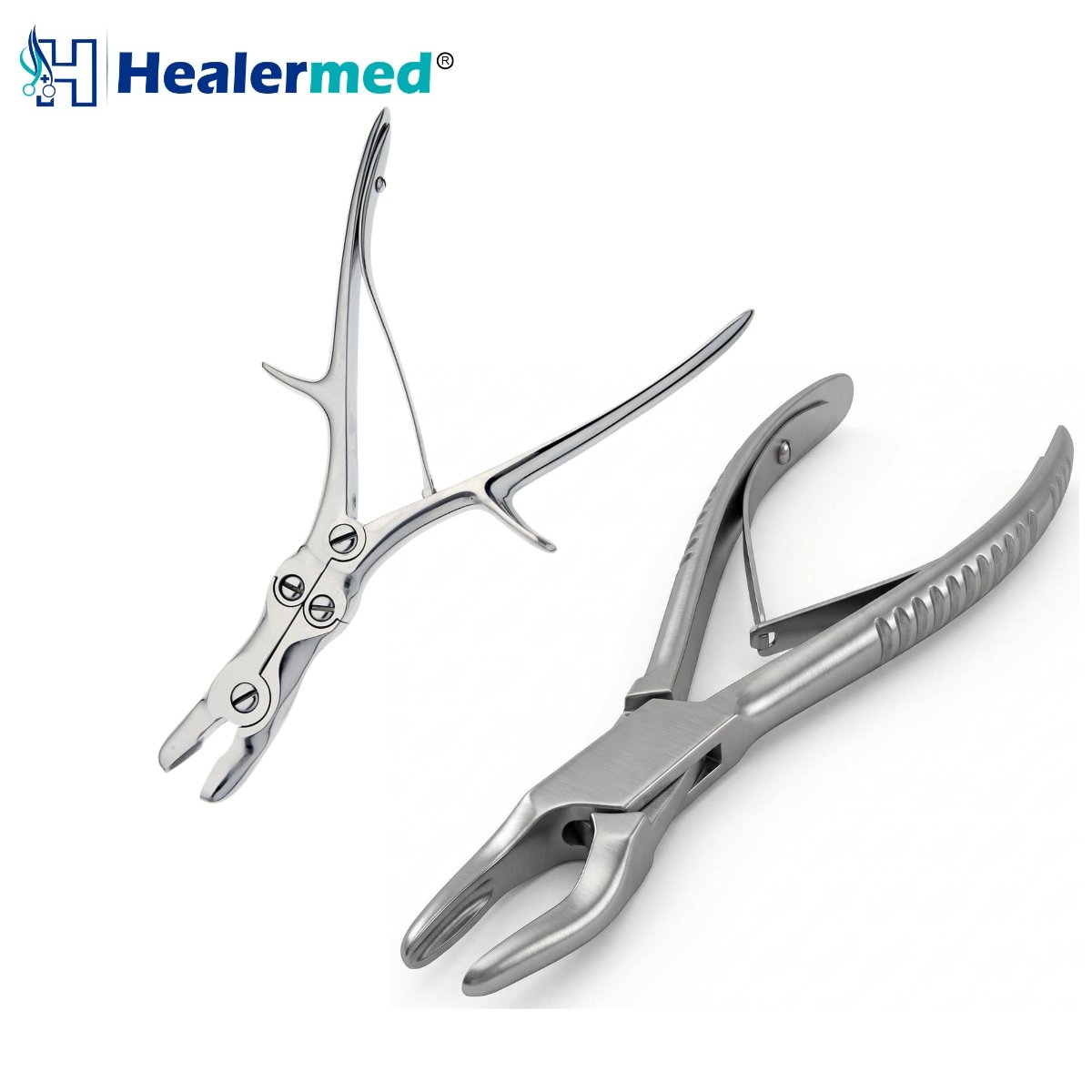
Related Instruments
Healermed Instruments is a direct manufacturer and global exporter of plastic surgery instruments, based in Sialkot, Pakistan. Our plastic surgery instrument catalogue covers surgical scissors, tissue forceps, needle holders, breast retractors, skin hooks, areola markers, dissectors and elevators, osteotomes, nasal rasps and complete instrument sets — 195 items in this category alone. Every instrument is forged, milled, hardened, assembled, polished and inspected in our own factory.
We sell to surgeons and clinics buying single pieces, and to distributors, hospital groups and OEM brands buying by the carton. Same instruments, same steel, same inspection. The only thing that changes is quantity and whether your logo goes on the shank.
Buying in volume or under your own brand? See wholesale and bulk order terms, or send us your instrument list and we will quote against it.
Plastic surgery instruments: names and uses
Plastic and reconstructive surgery covers aesthetic facial work, breast surgery, body contouring, hand and burn reconstruction, and microsurgery. The instruments share one requirement: they handle delicate tissue without crushing it. Below is what each group does, with the pattern names surgeons actually order by.
Scissors — cutting and dissecting
Our plastic surgery scissors range runs to 81 patterns.
Metzenbaum — blunt blade dissection through fascial planes; the general workhorse.
Iris — short, sharp, fine tips for skin edges and precise superficial work.
Stevens tenotomy — fine blunt dissection around tendon, eyelid and periorbital tissue.
Gorney — long-reach undermining in facelift and body contouring.
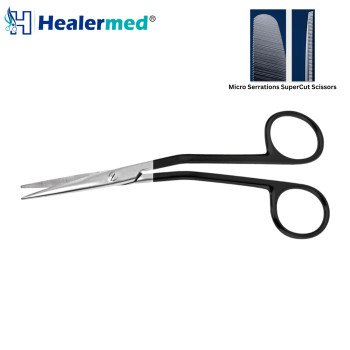
Aston facelift — rhytidectomy and delicate flap dissection.
Kaye — blepharoplasty and fine facial dissection.
Mayo — heavy tissue and suture cutting.
Nasal shears — cartilage trimming in rhinoplasty.
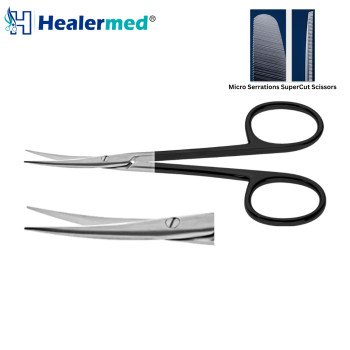
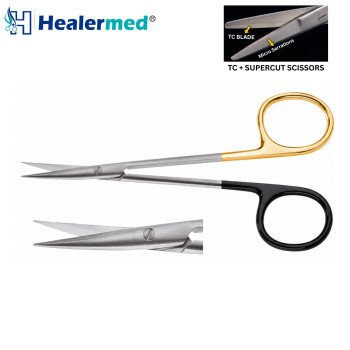
Browse by edge type: SuperCut serrated · tungsten carbide (TC) · SuperCut serrated plus TC · hard black ceramic SuperCut · standard steel · nasal shears
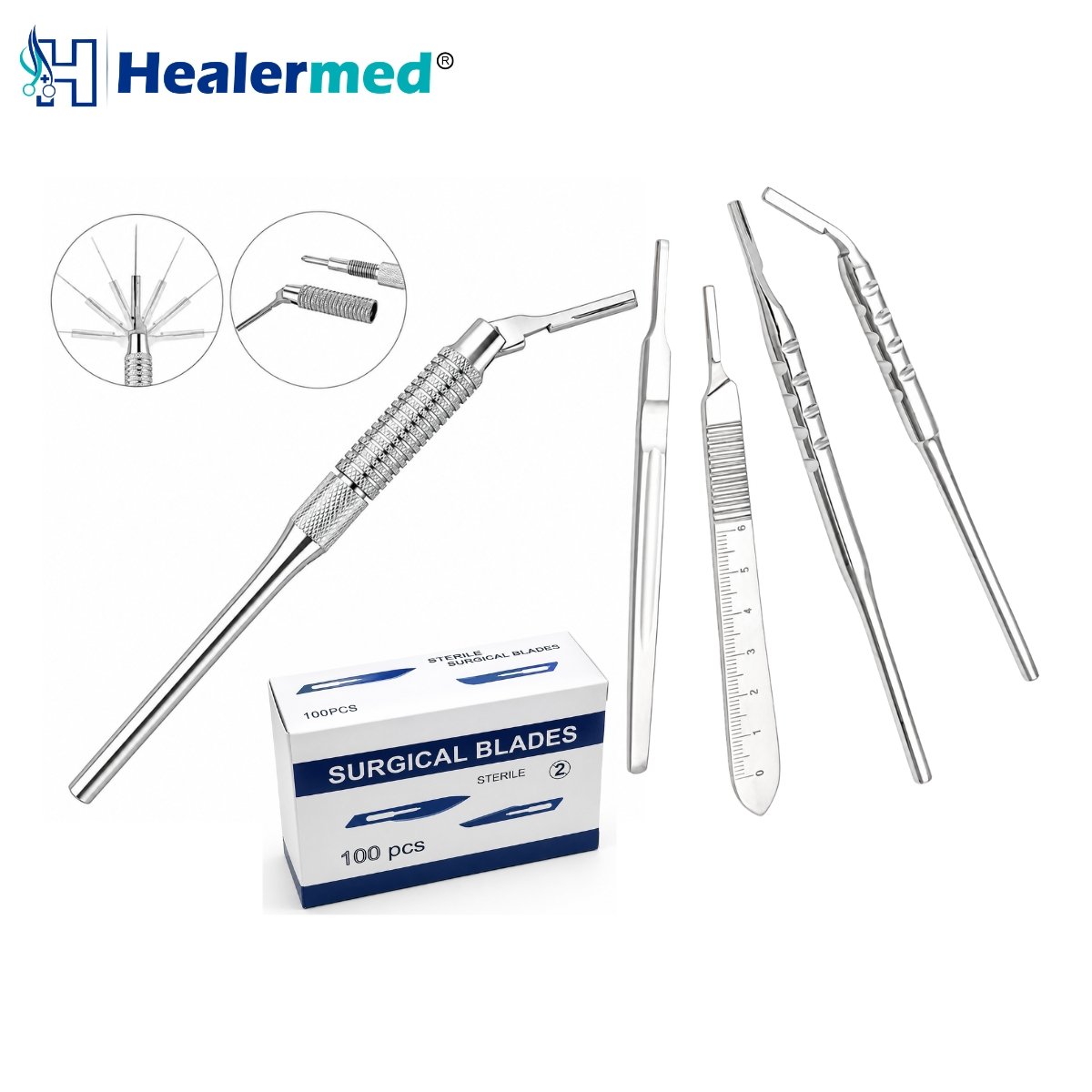
Related: scalpel handles and blades in #3, #4 and #7 patterns, and cartilage instruments for graft harvesting, crushing and shaping.
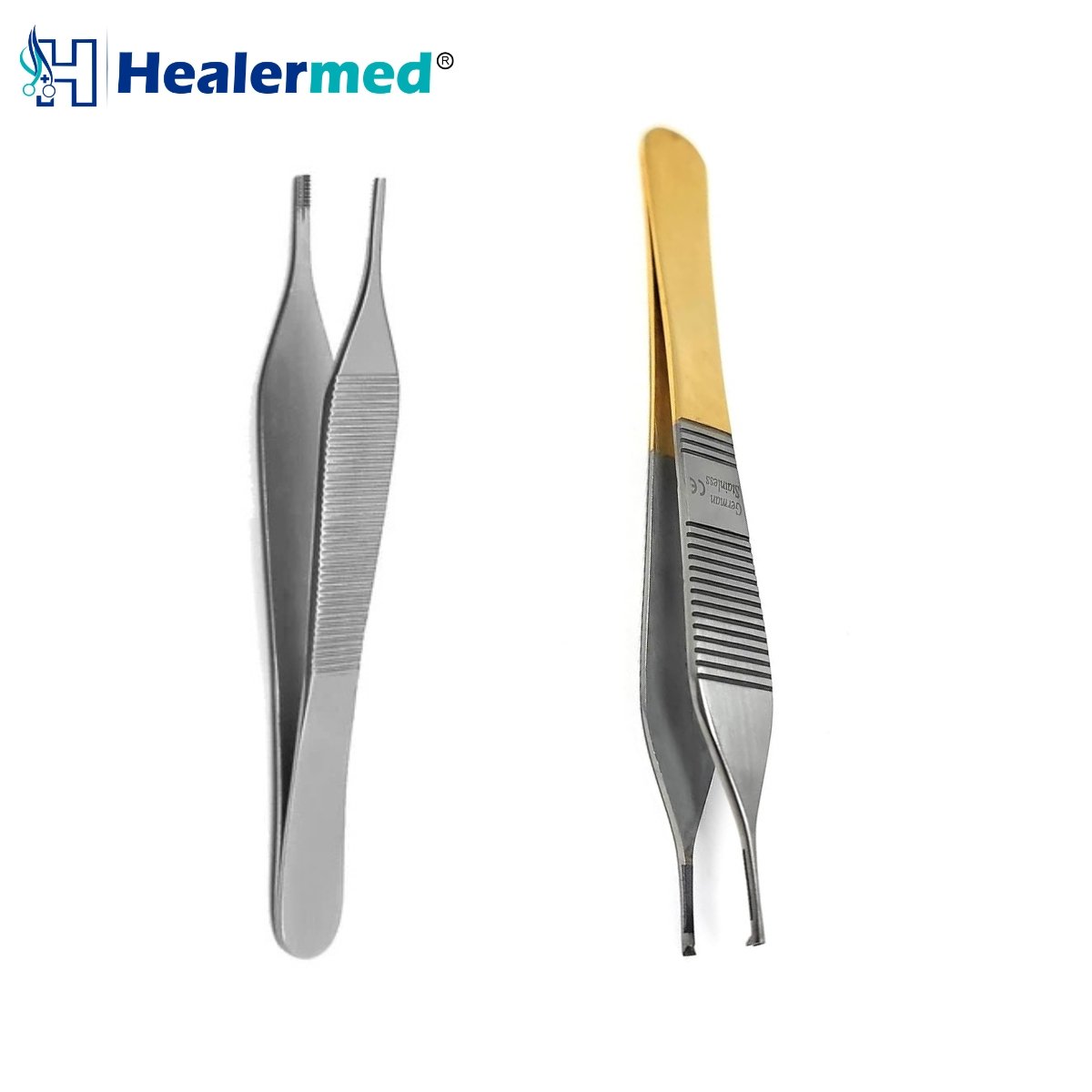
Forceps — grasping and holding
Tooth configuration matters more than length. Our thumb and tissue forceps include:
Adson — 1×2 teeth for skin edges; the standard closing forcep.
Brown-Adson — multiple fine teeth spreading grip across a wider tissue bite.
Gerald — long and fine, for deep field work with limited access.
Bishop-Harmon — three-hole handle, very fine tips, periorbital and eyelid surgery.
DeBakey — atraumatic serrations that hold vessels and flaps without crushing.
For locking instruments — Allis, Babcock, mosquito and Halsted haemostats, towel clamps — see ring forceps and clamps.
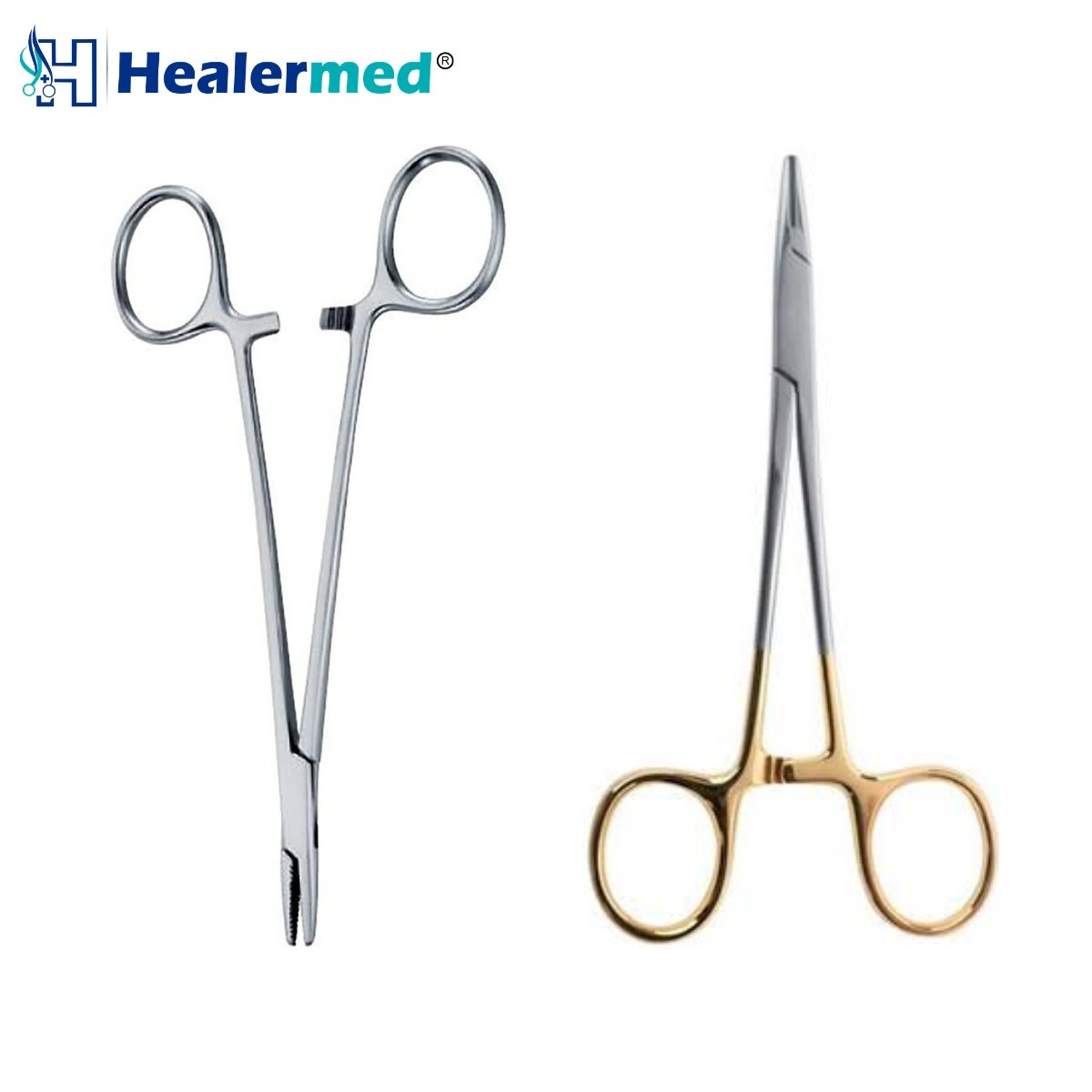
Needle holders — suturing
Our needle holders cover:
Castroviejo — spring handle, micro jaws, fine suture in microsurgery and eyelid work.
Webster — short, smooth-jaw, ideal for 5-0 and finer on the face.
Derf — delicate ring-handle pattern for facial closure.
Ryder — narrow jaws for vascular and fine suture.
Crile-Wood — general soft tissue closure.
Mayo-Hegar — heavier suture and deeper closure.
Gold ring handles mark tungsten carbide jaws in standard theatre convention, and we follow that convention.
Retractors — exposure
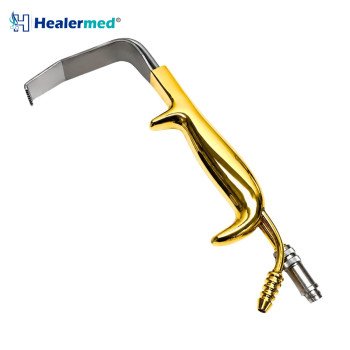
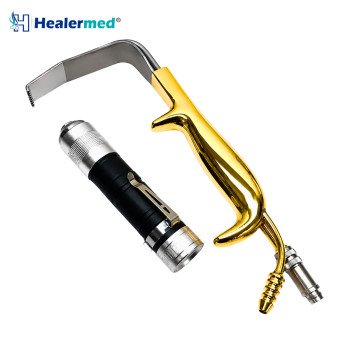
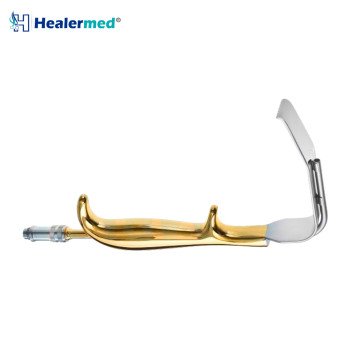
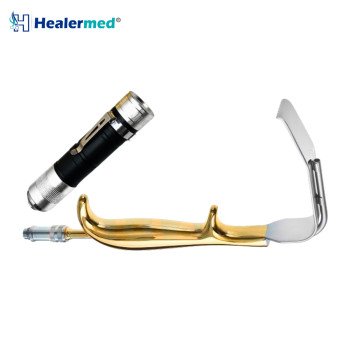
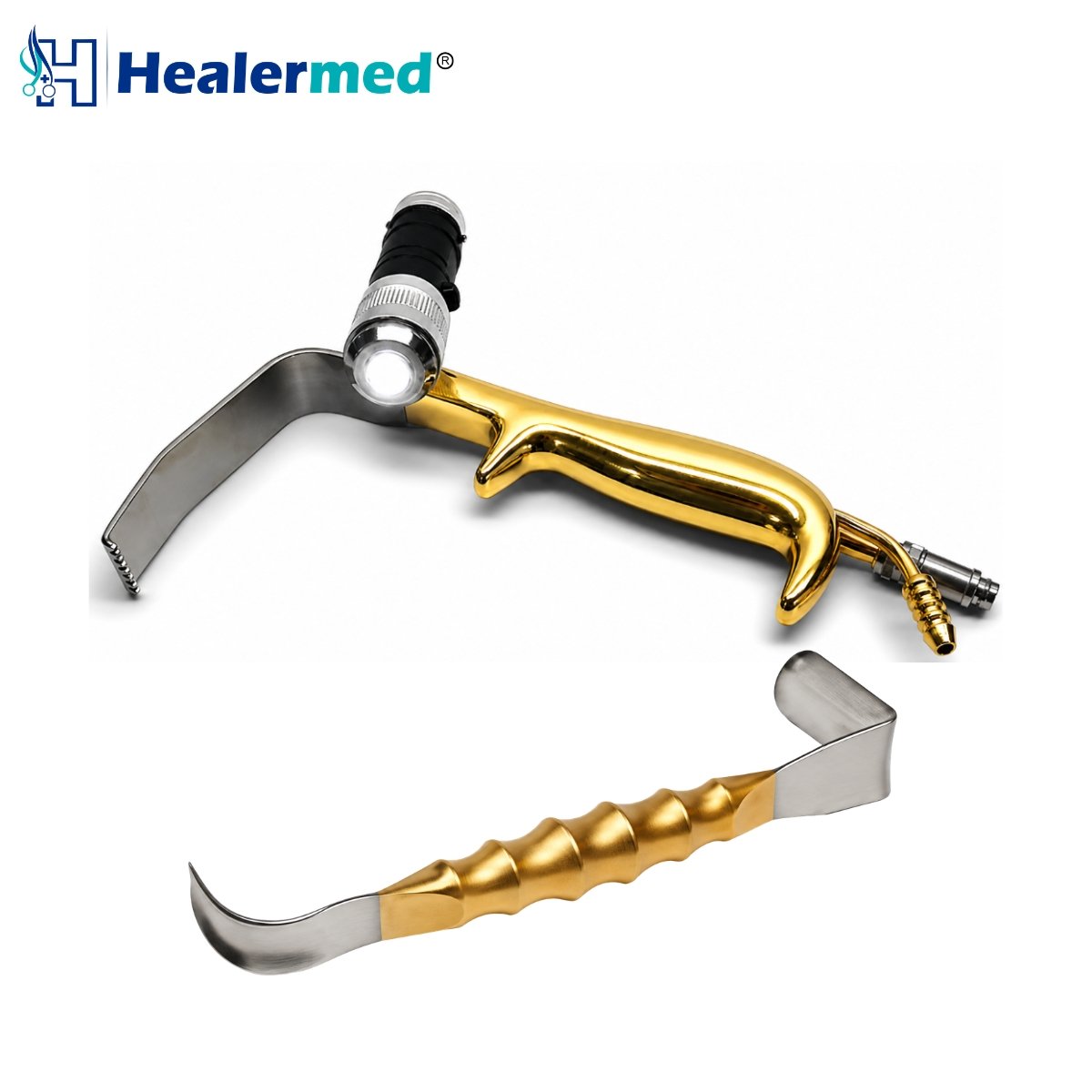
Our largest retraction range is breast retractors — 31 patterns including fibre-optic and lighted versions for implant pocket dissection, where blade width and depth should be chosen for the pocket rather than for habit. Common patterns include Freeman facelift, Ragnell, Senn, Army-Navy, Aufricht nasal and Cottle.
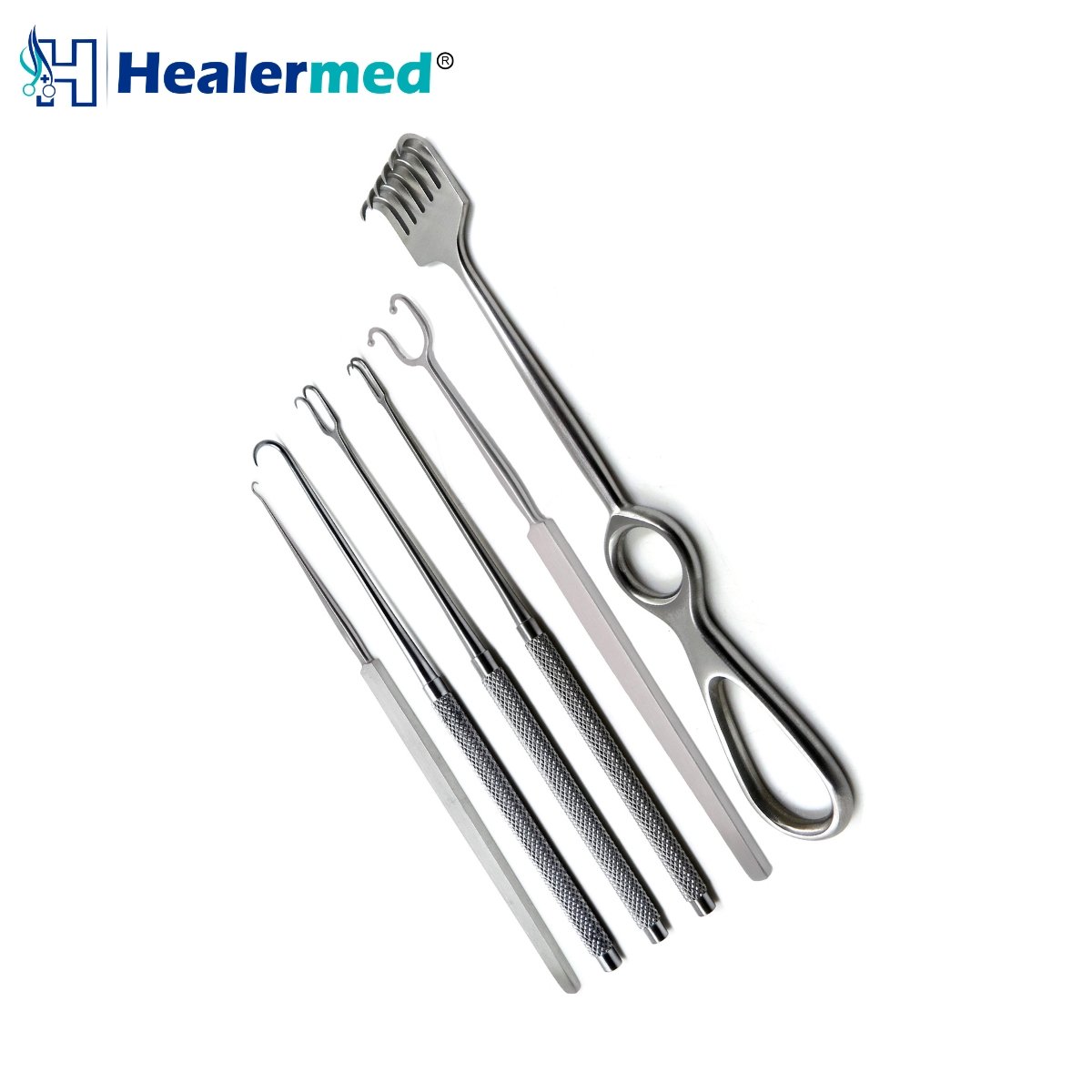
For fine skin-edge retraction, our surgical skin hooks come in single, double and multi-prong forms — Gillies, Joseph, Guthrie and Frazier patterns.
Breast surgery and surgical marking
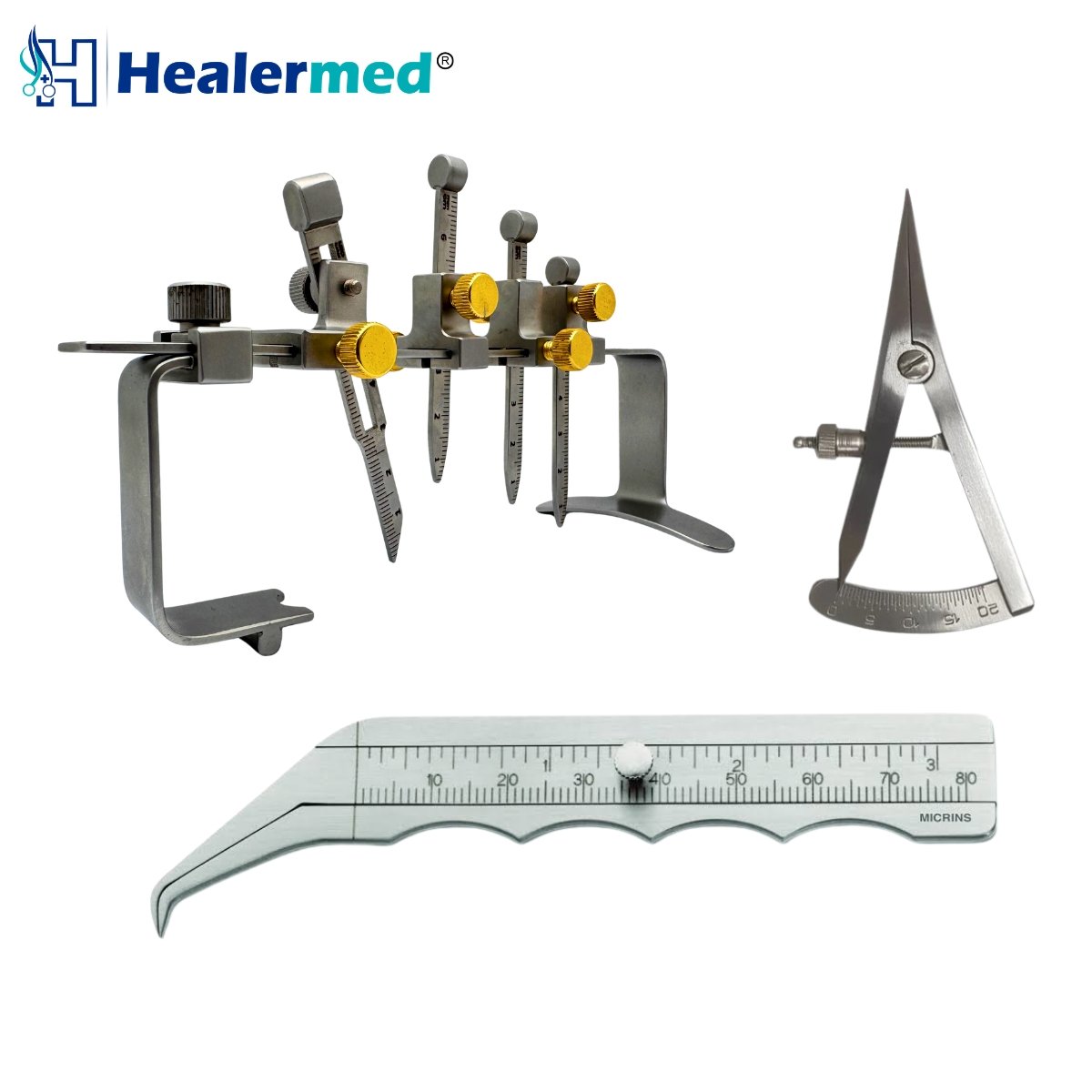
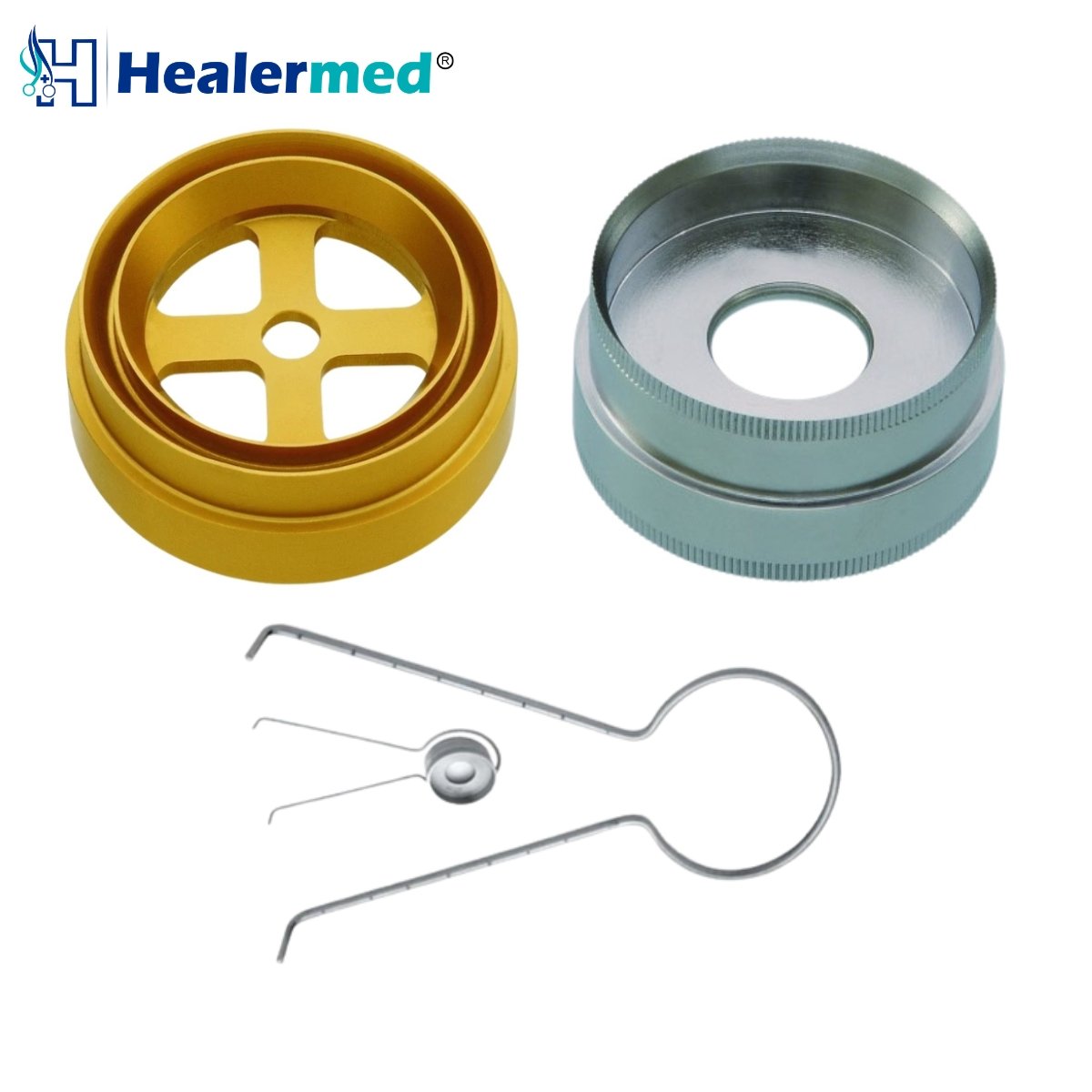
Preoperative marking decides the result before the first cut. Our areola markers and mammaplasty gauges include multi-size Grossman-pattern markers covering 40 to 52 mm in a single instrument. Our breast dissectors and elevators cover Dingman and MacCollum patterns for blunt pocket creation. Calipers, rulers and depth gauges sit under measuring instruments.
Bone and cartilage instruments
Rhinoplasty and reconstructive bone work uses chisels and osteotomes in straight, curved and guarded forms — driven with our surgical mallets in stainless, lead-filled and nylon-faced versions. Bone edges are trimmed with bone rongeurs, and costal cartilage harvesting for rib grafts uses our rib raspatories in Doyen and Semb patterns. Nasal bone contouring uses Fomon, Maltz and Aufricht rasps.
Complete instrument sets
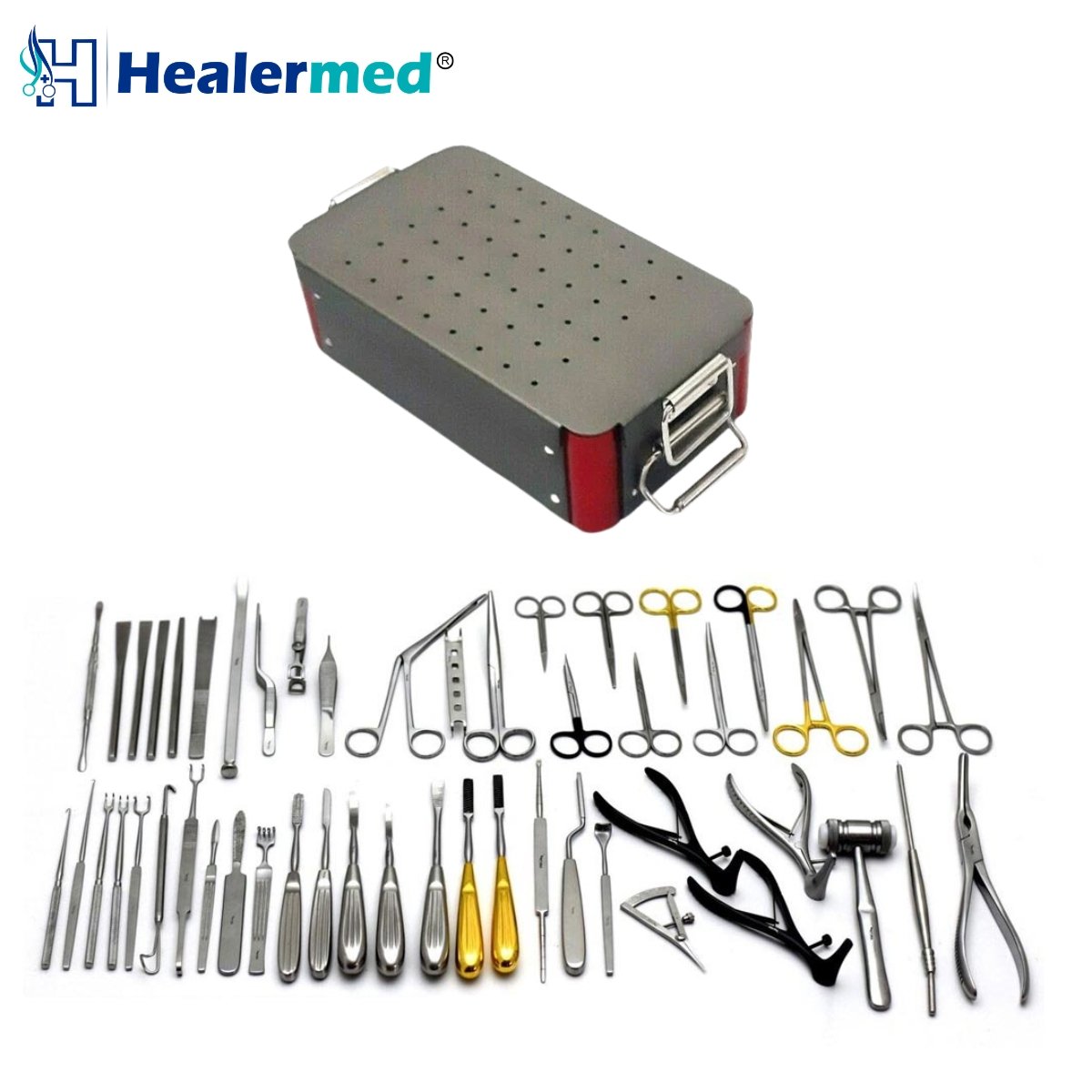
Prefer a ready-built tray? See plastic surgery complete sets and boxes, or send us the pattern list you want and we will build the set to your specification, in a sterilization case, marked with your numbers.
Procedures these instruments are used for
Our plastic surgery instrument range is specified for aesthetic, reconstructive and craniofacial work:
Facial aesthetic — rhytidectomy (facelift), blepharoplasty, otoplasty, brow lift, neck lift, buccal fat removal.
Nasal — open and closed rhinoplasty, septoplasty, revision rhinoplasty, rib and ear cartilage grafting.
Breast — augmentation, mastopexy, reduction mammaplasty, reconstruction, gynecomastia correction.
Body contouring — abdominoplasty, brachioplasty, thigh lift, liposuction and fat grafting.
Reconstructive — burn debridement and grafting, cleft lip and palate, hand surgery, flap and microvascular work.
Aesthetic clinic — hair transplantation, dermatology, scar revision and minor skin procedures.
Patterns surgeons ask for by name
Twelve instruments from this category that get reordered again and again. Model numbers are ours and are laser-marked on the instrument.
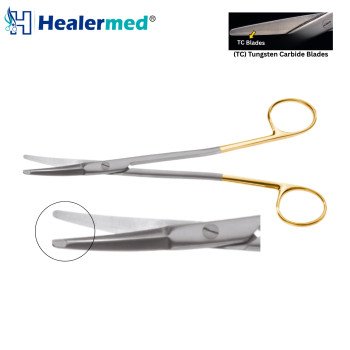
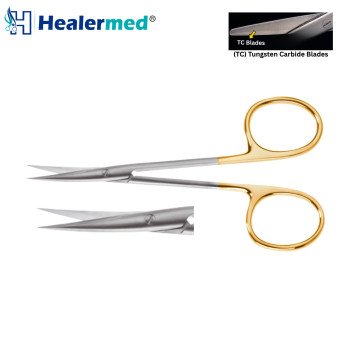
Aston Facelift Scissors, Tungsten Carbide HMI-AFT10-TC
Rhytidectomy and delicate flap dissection. Gold ring handles mark the TC edges.
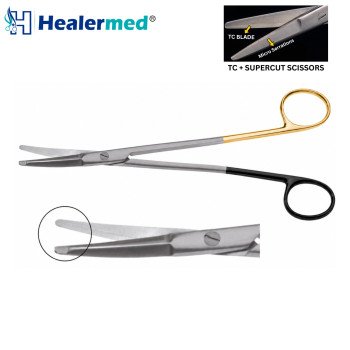
Aston Facelift Scissors, Serrated SuperCut Plus TC HMI-AFT-SCTC
Top of the Aston range — SuperCut geometry with a carbide edge that lasts.
Aston Facelift Serrated SuperCut Scissors PS-AFT-SC
Same pattern in plain steel. The sensible pick for a second or backup set.
Gorney Facelift Scissors, SuperCut Serrated HMI-PS-GFS1-SC
7.5 inch / 19 cm. The long-reach option for undermining in facelift work.
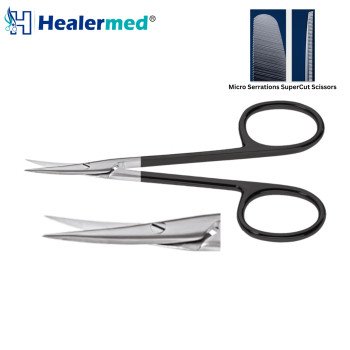
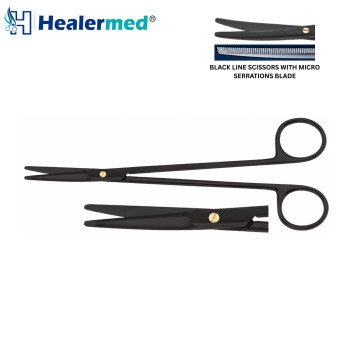
Iris Serrated BlackTiCer™ Scissors PS-IS-BSC
Black ceramic coating kills glare under theatre lights. Fine work, no reflection.
Grossman Areola Marker, 4 sizes HMI-PS-GA-4S
40 / 44 / 48 / 52 mm in one instrument. Mastopexy and breast reconstruction marking.
MacCollum Dingman Breast Dissector HMI-PS-31MDB
Blunt pocket dissection for implant placement. A standing bulk line for distributors.
Davis Nasal Projectometer HMI-DNP-01
Measures nasal projection and dorsal height in rhinoplasty planning. Reusable steel.
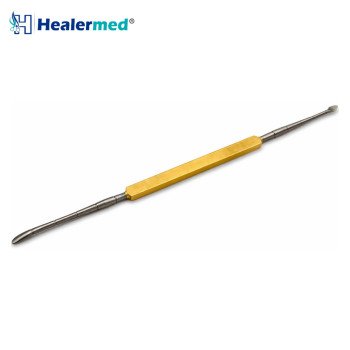
Fomon TC Nasal Rasp, double ended HM-FMN-R910
Sharp #9 and #10 cuts, 5 mm wide. Contouring and smoothing nasal bone.
Aufricht Nasal Suction Retractor ENT-AS-01
Retraction and suction in one hand. Keeps the dorsal field clear during rhinoplasty.
Gorney Septum Suction Elevator, 18 cm ENT-GS18
Septoplasty and rhinology. Elevates the mucoperichondrial flap while it suctions.
Cottle Nasal Septum Speculum, 14 cm ENT-SP50
50 mm blades, ultra-thin 1 mm tips for visualisation during septal work.
How to choose plastic surgery instruments
Decide the edge before the pattern. SuperCut means one razor-honed blade working against one serrated blade, which grips tissue instead of pushing it away. Tungsten carbide means a hard insert brazed into the blade, which keeps its edge far longer. They solve different problems, and SuperCut plus TC gives you both at the highest price point. If an instrument is in daily use, carbide pays for itself. For backup sets and rarely used patterns, plain steel is the sensible spend.
Match length to depth of field, not to preference. A 19 cm Gorney is right for undermining a facelift flap and wrong for eyelid work. Buy two lengths of the pattern you use most before you buy a third pattern.
Pick teeth by tissue. 1×2 teeth for skin edges, multiple fine teeth to spread load across a wider bite, atraumatic serrations for vessels and flaps. The wrong forcep crushes what it was meant to protect.
Choose the finish for the light, not the look. Mirror polish reflects theatre lighting into the field. Matte, satin and black ceramic coatings cut that glare, which is why they dominate facial aesthetic sets.
Buy the tray, not the piece, if you are equipping a new theatre. A set costs less than the same instruments bought individually and arrives matched in finish and length.
What drives the price of a surgical instrument
Two instruments that look identical in a photograph can differ threefold in price. The difference is real, and it is worth understanding before you compare quotes.
Edge type. A tungsten carbide insert has to be brazed, ground and matched. It roughly doubles the cost of a scissor and multiplies its working life.
Material. Grade 5 titanium costs several times what martensitic stainless costs, before machining.
Hand finishing time. A micro forcep with 0.3 mm tips takes many times longer to set and polish than a general dissecting forcep.
Coating. Black ceramic and titanium nitride coatings add a process step and a cost.
Quantity. Setup and tooling are fixed. A hundred pieces of one pattern costs far less per piece than five.
Because we are the factory and not a reseller, there is no distributor margin stacked on top of any of it. Send us a list and we will price it honestly.
Materials, hardness and finish
German stainless steel
AISI 420 and 440A martensitic grades for cutting instruments; 410 and 17-4PH where spring temper or corrosion resistance takes priority. Heat treated in-house, hardness tested per batch.
Titanium
Grade 5 Ti-6Al-4V for microsurgical forceps and needle holders. Around 40% lighter than steel, non-magnetic, and non-reflective when anodized — which matters under microscope illumination.
Tungsten carbide
Brazed TC inserts on scissor blades and needle holder jaws. Longer service life, and re-tippable rather than disposable when the insert eventually wears.
Surface finish
Mirror, satin, matte or black ceramic coating on request. Matte and black finishes cut glare under theatre lights. All instruments are passivated after final polish.
How we manufacture them
Seven stages, all under one roof in Sialkot. No stage is outsourced.
01 FORGING
Bar stock is die-forged to near-net shape, then normalised to relieve stress.
02 MILLING
Box locks, ratchets, serrations and jaw profiles are cut to drawing.
03 HEAT TREATMENT
Hardening and tempering to the target Rockwell range for that pattern, with per-batch hardness testing.
04 ASSEMBLY AND SETTING
Halves are joined, pivots set, TC inserts brazed, and the action adjusted by hand.
05 POLISHING
Progressive polishing to the requested finish, then edge honing on cutting instruments.
06 PASSIVATION
Acid passivation restores the chromium oxide layer that resists corrosion in the autoclave.
07 INSPECTION AND MARKING
Dimensional check, function test, laser marking of the model number and any customer branding, then packing.
OEM, private label and bulk supply
A large share of what leaves this factory carries somebody else's name on it. If you are a distributor, a hospital group or a brand, we supply plastic surgery instruments laser-marked with your logo, your catalogue numbers and your packaging.
We also manufacture to drawing or to sample. Send a dimensioned drawing, a measured photograph, or a physical sample, and we produce a prototype for your approval before any production run starts. Custom patterns, non-standard lengths and modified tip geometries are routine work here, not an exception.
Next step for volume buyers
Read the terms on wholesale and bulk orders, then contact Healermed with your instrument list, quantities and destination. We reply with a quote, lead time and shipping cost.
Export markets and shipping
Healermed Instruments exports plastic surgery instruments worldwide from Sialkot, Pakistan — the manufacturing centre that supplies a large share of the world's surgical instruments. We ship regularly to the United States, United Kingdom, Germany, France, Spain, Italy, the Netherlands, Poland, the United Arab Emirates, Saudi Arabia, Turkey, Australia, Canada, Brazil, Mexico, South Africa, Malaysia and Japan. Shipments go by DHL, FedEx, UPS and DPEX with tracking. Stock items normally dispatch within a few working days; custom and bulk production lead times are quoted per order. As an EU Registered Exporter (REX), our shipments to the European Union carry the documentation your customs broker will ask for. Download our PDF catalogues for the full range with model numbers.
Sterilization and instrument care
All Healermed plastic surgery instruments are reusable and autoclavable. Instrument life depends far more on reprocessing discipline than on steel grade, so the short version:
Rinse immediately after use. Blood and saline are the two things that destroy instruments. Do not let either dry on the surface.
Use neutral pH detergent. Strongly acidic or alkaline cleaners attack the passive layer. Ultrasonic cleaning with box locks open is the reliable method for hinged instruments.
Dry fully before autoclaving. Trapped moisture plus heat is how pitting starts.
Lubricate hinges. Instrument milk on box locks and ratchets after cleaning, before sterilization.
Autoclave per your validated cycle. Steam sterilization at 134°C is standard for these instruments; follow your facility's validated parameters and cool them slowly.
Store dry and separated. Fine tips need tip guards. Stacking micro forceps loose in a tray is the fastest way to ruin them.
Frequently asked questions
What instruments are in a basic plastic surgery set?
A working starter set usually runs to 30–40 pieces: Metzenbaum and Iris scissors, a suture scissor, Adson and Brown-Adson forceps, an atraumatic forcep, two or three needle holders in different lengths, skin hooks, Senn and Ragnell retractors, mosquito and Halsted haemostats, Allis clamps, towel clamps and a scalpel handle. Exact contents depend on whether you are doing facial, breast or body work.
What is the difference between SuperCut and tungsten carbide scissors?
They solve different problems. SuperCut means one razor-honed blade working against one serrated blade, which grips tissue instead of pushing it away, so the cut is cleaner. Tungsten carbide means a hard insert brazed into the blade, which keeps its edge far longer. SuperCut plus TC gives you both, at the highest price point.
What steel do you use?
German-grade martensitic stainless — mainly AISI 420 and 440A — with 17-4PH and 410 where the pattern calls for it, and Grade 5 titanium for microsurgical instruments. Material certificates are available on request for bulk orders.
Why do gold ring handles matter?
Gold handles are a convention, not a decoration. They tell the scrub nurse at a glance that the instrument has tungsten carbide jaws or blades, which changes how it is sharpened and how it should be handled. We follow the convention across the range.
Are your instruments reusable or single use?
Reusable. They are built for repeated steam sterilization, and cutting instruments can be re-sharpened. Tungsten carbide inserts can be replaced rather than the whole instrument being scrapped.
How long do surgical scissors stay sharp?
It depends almost entirely on what they cut and how they are reprocessed, not on the brand. A plain steel scissor used daily on tough tissue may need honing within months; the same pattern in tungsten carbide will run far longer. Cutting suture with tissue scissors is the single fastest way to ruin an edge.
Do you supply OEM and private label instruments?
Yes. Laser marking with your logo and catalogue numbers, your packaging, and your own instrument specifications. Terms are on the bulk orders page.
What is your minimum order quantity?
There is no minimum for stock instruments bought from this store — you can order a single piece. Minimums apply to custom-marked, custom-finished and made-to-drawing work, and vary by pattern. Ask us for the MOQ on your specific item.
Can you manufacture an instrument from my drawing or sample?
Yes. Send a dimensioned drawing, a measured photograph, or the physical instrument. We produce a sample for approval first, then run production against the approved sample.
Are the instruments CE marked and FDA compliant?
Healermed operates under ISO 13485 and ISO 9001, manufactures to FDA CGMP, holds CE marking and EUDAMED registration, and is a European Commission Registered Exporter (EU REX). Documentation is provided on request.
Why buy surgical instruments from Pakistan?
Sialkot has manufactured surgical instruments for over a century and supplies a large share of the world's output, including instruments sold under European and American brand names. Buying from the factory removes the layers of margin between the forge and your theatre. The question worth asking any supplier is not which country, but whether they own the process — we forge, harden, finish and inspect in-house.
Do you provide material and quality certificates?
Yes, on request for bulk and OEM orders — material composition, hardness test results, and our ISO 13485 and CE documentation.
Where do you ship, and how long does it take?
Worldwide, by DHL, FedEx, UPS and DPEX with tracking. Stock items normally dispatch within a few working days; custom and bulk production lead times are quoted per order.
Can you build a custom instrument set for my clinic?
Yes. Send the pattern list and we will build the tray, matched in finish and length, in a sterilization case, marked with your numbers. Existing sets are in complete sets and boxes.
Related instrument ranges
Plastic surgery rarely stops at one category. Body contouring uses our liposuction cannulas and accessories — 169 items covering infiltration, aspiration and fat transfer, in Luer lock and Toomey hubs, including Mercedes, cobra, spiral port and basket tips. Rhinoplasty and septal work overlaps with our ENT surgical instruments. Fine facial and flap work uses our microsurgery and ophthalmic instruments. Trays, kidney dishes and sterilization containers sit under hollowware and sterilization, and ready-built trays across all procedures are in complete surgical instrument sets.
Talk to the manufacturer, not a reseller
Healermed Instruments is the factory. When you ask about steel grade, tip geometry, hardness or lead time, the answer comes from the people who made the instrument.
Contact Healermed Instruments · Wholesale and bulk orders · Download PDF catalogues