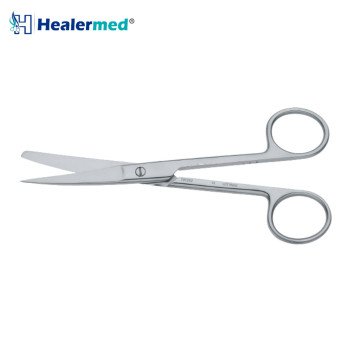

Plastic Surgery Scissors › Standard
Standard Plastic Surgery Scissors — Stainless Steel Patterns & Uses
Two standard stainless-steel cutting blades for general soft-tissue dissection and routine cutting in plastic and reconstructive surgery. The dependable, cost-effective workhorse — available in every common pattern from Healermed Instruments.
What are standard plastic surgery scissors?
Standard plastic surgery scissors have two conventional stainless-steel cutting blades — no tungsten carbide inserts and no micro-serrations. They handle the bulk of everyday surgical cutting: soft-tissue dissection, undermining, trimming and routine work where a clean, reliable cut is all that is required. Because they are the most economical blade type, they are the default choice for general use, high-turnover departments and training environments, and they are available in the full range of surgical patterns and sizes.
Key benefits
- Versatile across routine soft-tissue cutting and dissection
- Most cost-effective blade type — efficient for volume and training sets
- Available in every common pattern and size
- Forged from surgical-grade stainless steel for corrosion resistance
- Fully autoclavable and easy to maintain
- Can be resharpened to extend service life
Available standard scissor patterns
All of Healermed's plastic surgery patterns are offered with standard stainless blades.
Standard vs. the other blade types
Standard stainless is the right choice for routine and budget-conscious use. For high-volume cutting or tissue control, compare the carbide and SuperCut options.
Cleaning & sterilization
- Clean and rinse immediately after use to remove all tissue and residue.
- Autoclave in a pouch left slightly ajar so steam reaches every surface.
- Lubricate the pivot periodically and inspect blades and joints before each use.
- Store dry after washing in neutral-pH water; resharpen at regular intervals.
Order standard scissors direct from the manufacturer
Healermed Instruments manufactures standard plastic surgery scissors in every pattern and size, with factory pricing for retail, bulk, wholesale and OEM orders.
Standard scissors — questions
What is the difference between standard and tungsten carbide scissors?
Standard scissors use conventional stainless-steel blades and are more economical. Tungsten carbide scissors (gold finger rings) have carbide inserts that hold an edge roughly five times longer, lowering cost-per-use for high-volume cutting.
Are standard scissors good for training and student sets?
Yes. Their lower cost and full pattern range make them well suited to universities, teaching hospitals and training kits where a reliable, resharpenable instrument is needed without the carbide premium.
Can standard surgical scissors be resharpened?
Yes. Standard stainless blades can be professionally resharpened to restore the cutting edge and extend service life, provided the instrument is otherwise sound.
What patterns are available with standard blades?
Metzenbaum, Iris, Stevens tenotomy, tenotomy, Littauer stitch, operating and dissecting patterns are all available with standard stainless blades, in straight and curved versions and various tip configurations.
Healermed Instruments — surgical instrument manufacturer, Sialkot, Pakistan. Steel finger rings denote standard stainless blades.